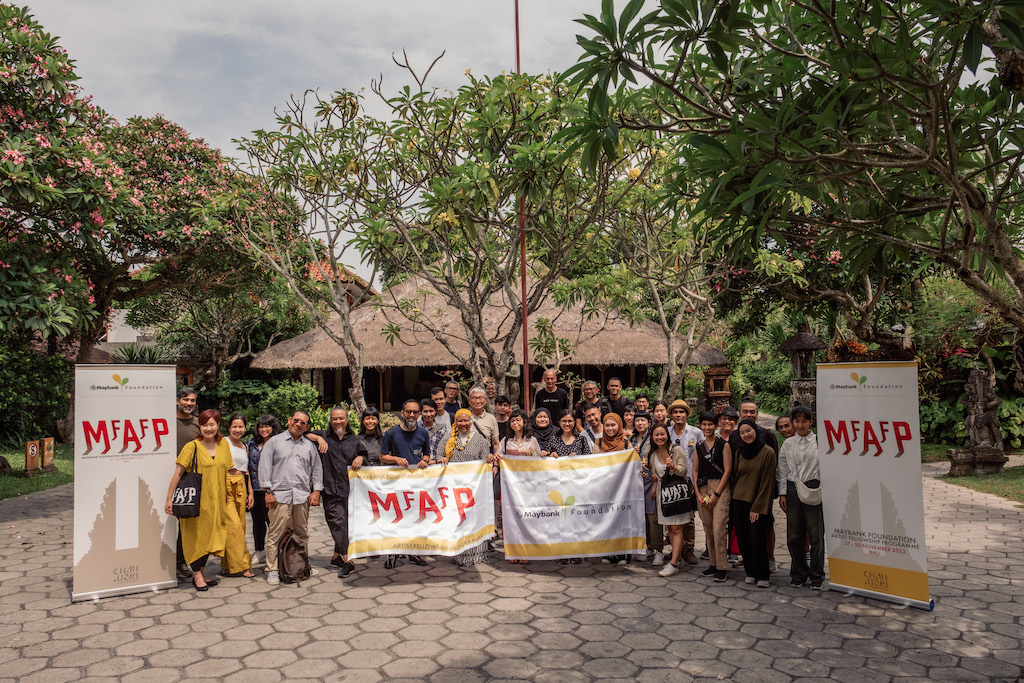
A pioneering mentorship program for emerging artists paired youth with experience in a unique opportunity to nurture and inspire creativity and professionalism while recognising Bali as an essential art historical and spiritual intersection of Southeast Asian modern art.
Fusing knowledge with the next generation in an atmosphere of sharing and spontaneity on the Island of the Gods is a catalyst for magical encounters and outcomes. The Maybank Foundation Art Fellowship Programme (MFAFP), 27-30 November 2023 in Bali, established the dynamics to arouse and develop the creative potential of twelve invited SE Asian artists aged between twenty-seven and thirty-nine while engaging in some of the pillars of Balinese culture.
The MFAMP is the vision of Khai Hori, curator, director, and partner of Chan + Hori Contemporary, a contemporary art curatorial consultancy in Singapore. Maybank Foundation, the CSR vehicle of the Maybank Group, sponsored the event. “The MFAFP is intended as an alternative training to augment the professional development of emerging Southeast Asian artists (originally exclusively for Malaysians). It goes beyond the need for technical know-how to include a holistic worldview and reflection of an artists’ practice for themselves in the context of traditional cultures and the developing global landscape,” Khai Hori told LifeasArtAsia.
“I was approached by the Maybank Foundation for ideas, originally with the intent of a more traditional artist residency programme in Malaysia for Malaysian artists. MFAFP was a counter proposal from me based on three editions of a similar fellowship model called HAO I conducted in Singapore over 20 years ago,” Khai explained.
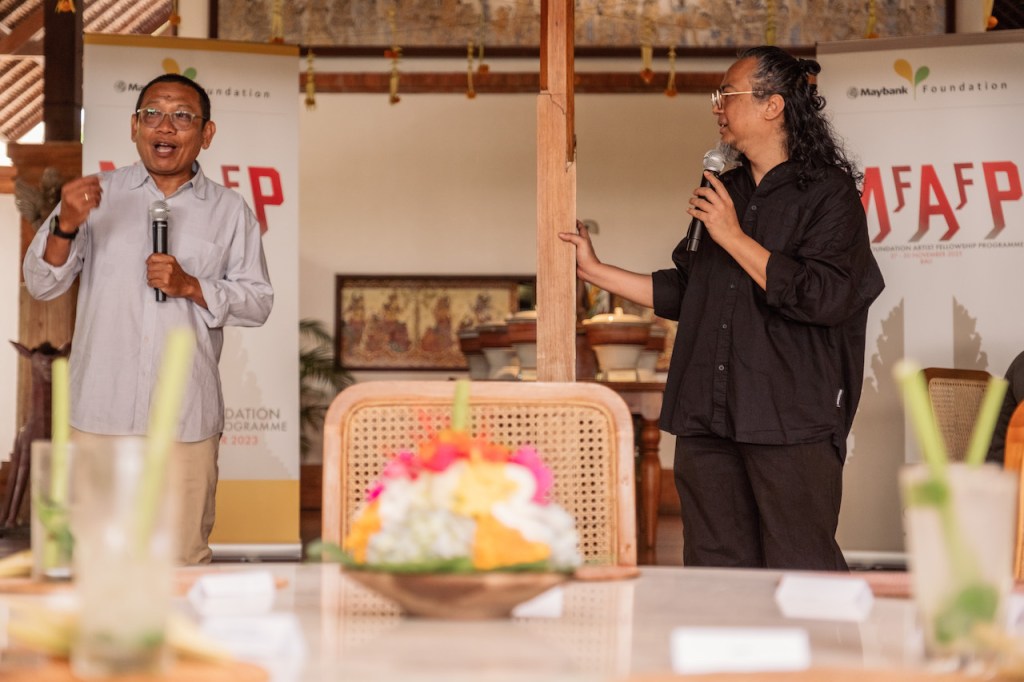
Dr Yudha Bantono and Khai Hori during a presentation on Day One of the MFAFP at the historic Tandjung Sari Hotel, Sanur.
MFAFP Participants
The four-day programme of activities and non-formal workshops immersed the group numbering thirty, including the MFAFP team and comprised of artists Prak Dalin and Chang Shanghai from Cambodia, Ella Mendoza and Krista Nogueras from the Philippines, Ruth Marbun and Candrani Yulis from Indonesia, Blank Malaysia, Nickson Paul Atia, Sarah Radzi and Lith Ng Yee Leng from Malaysia and Naiziya Nicole Phua from Singapore.
The MFAFP mentors were Marco Kusumawijaya, Chariman Rujak Center for Urban Studies, Jakarta, Kamin Lertchaiprasert, artist and Co-Founder The Land Foundation, Chiang Mai, Thailand, Dr Yudha Bantono, General Manager, Wianta Foundation, Bali, Eriko Kimura, Deputy Director and Chief Curator of Hirosaki Museum of Contemporary Art, Japan, Composer and Musician Putu Adi Septa, Bali and Taro Amano, Chief Curator at Tokyo Opera City Art Gallery in Tokyo and the Yokohama Museum of Art, Japan.
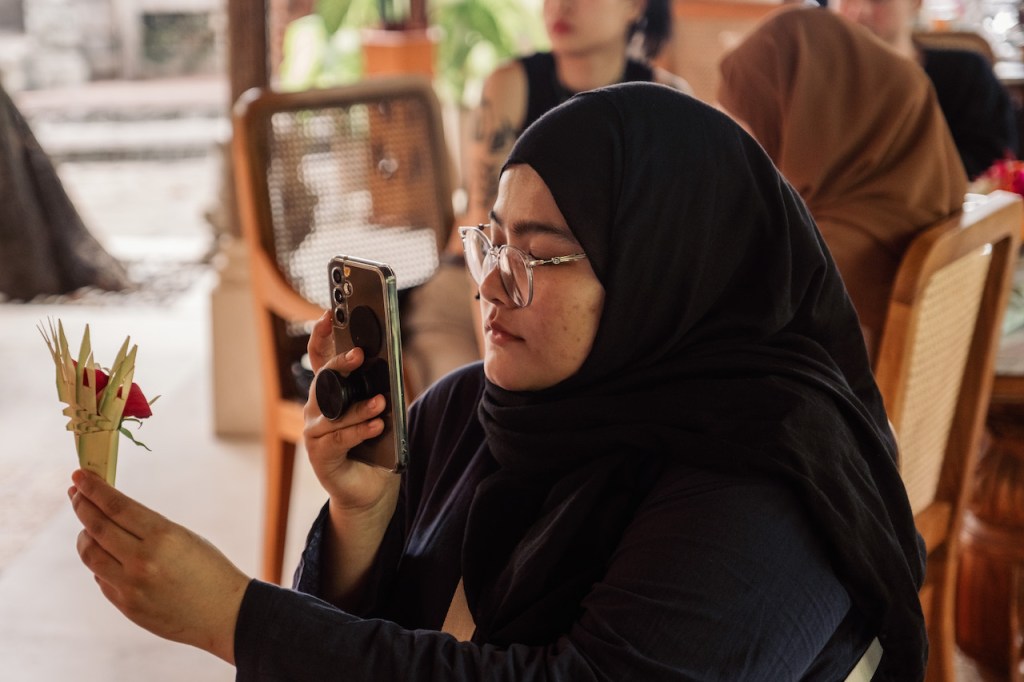
Sarah Radzi focusses upon a Balinese offering, one of the cultural icons highlighted by Marco Kusumawijaya during his presentation on understanding Bali from a strangers perspective, Day One.
Other mentors included Jindee Chua and Suriawati Qiu, Architect and Designers and Co-Founders of CushCush Gallery, Denpasar, Bali, Ade Darmawan, Art Director of Ruang Rupa, Jakarta Bieannle and Curator of Documenta 15, Denise Lai, Curator, A+ Works of Art Gallery, Kuala Lumpur, Malaysia, Dr Agung Prianta, Expert in Bali property development, urban planning, and tourism, David Chew, Deputy Director, Festivals & Precinct Development, National Heritage Board Singapore, Shahrul Jamili, Artist ,Kuala Lumpur and Mangku Mastrum and Mangku Reza, Priests at Pura Luhur Natar Sari, Apuan, Bali.
This writer contributed as a mentor, while offering insights into the local culture and art world and hosting a discussion on the traditional and modern Balinese art highlights of Ubud’s Museum Puri Lukisan’s collection. A special presentation by Maybank Foundation CEO, Izlyn Ramli, highlighting its history dating back to the 1980s and cultural activities, punctuated the MFAFP opening luncheon at the Tandjung Sari Hotel, Sanur on 27 November.

Maybank Foundation CEO, Izlyn Ramli during the luncheon presentation on Day One at Tandjung Sari Hotel, Sanur
MFAFP Adventures
MFAFP participants encountered picturesque venues from the ocean to the highlands, the historical to the contemporary. Workshops were held at iconic destinations such as the beachside Tandjung Sari Hotel in Sanur, the former international meeting locale for the rich and famous and East and West intellectuals, the UNESCO Heritage Site of the Jati Luwih Rice Terraces and Subak Irrigation System in the Tabanan central highlands, the Tony Raka Art Gallery in Ubud and Museum Puri Lukisan.
After activities at Tandjung Sari, Day One culminated in the group touring Jimbaran Hijau, South Bali, as guests of Dr Agung Prianta. Kamin Lertchaiprasert and Shahrul Jamili led a presentation on Spirituality and Art. Prianta then hosted a workshop on his vision, mission and values of Jimbaran Hijau, his new art precinct and sustainable tourism village development JHub. The MFAFP group enjoyed the evening at LOCCA Jimbaran, Prianta’s stunning oceanside restaurant with views towards Ngurah Rai International Airport.
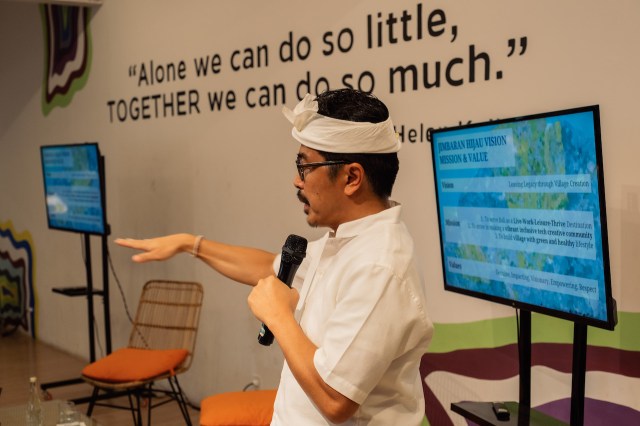
Dr Agung Prianta hosting a presentation on Jimbaran Hijau at JHub during Day One of MFAFP
Day Two was highlighted by a Balinese cuisine luncheon at the Upuan mountain residence of art maverick Made Wianta (1949-2020), with stories and insights into his practice described by Dr Yudha Bantono. A presentation hosted by Denise Lai and Ade Darmawan kept us glued to our seats as Darmawan shared some of his experiences during the recent controversial Documenta 15. A tour of the nearby temple, Pura Luhur Natar Sari led by Burat Wangi, Mangkus Mastrum and Mangku Reza highlighted the regional significance of the temple’s specific ceremonies. The day’s activities concluded with a presentation on the sacred functions of Jati Luwih subak, culminating in a rice field stroll while evading wet season downpours. On route to home base Sanur, an evening Durian tropical fruit feeding frenzy at a roadside stall ignited a unique and dynamic experience in collective bonding and interaction.
The MPAFP encouraged artists to interact and develop relationships among each other and the mentors, some key stakeholders and gatekeepers in the SE Asian art world in casual surroundings, including cafes and restaurants and during downtime at Maison Aurelia Hotel Sanur. This engagement allows opportunities to develop relationship-building skills and familiarize themselves with the mindset of art world insiders to seek prospects to consult with and work together as partners across geographies and disciplines in future projects.

MFAFP participants and friends at the Apuan residence of contemporary art maverick Made Wianta, Day Two
“Between themselves and the mentors, it is hoped that the artists form independent networks to forge future partnerships and collaborations, to open new perspectives and deepen the thinking and processes behind each artist’s trajectory and to connect the artists to the ideas of professionals in a less linear art world setting,” Khai said.
“Just imagine, as a young artist, it is sometimes difficult to meet people who work in museums or understand the local and international art scene like the mentors at MFAFP. These mentors have long enough experience to enable them to share their knowledge and answer our curiosity,” Candrani Yulis said to LifeasArtAsia on how she benefitted from the program. “On the other hand, there is another excitement when you can chat with other young artists from various countries. Knowing each other’s topics and work practices triggers us to interact with each other and develop valuable friendships.”
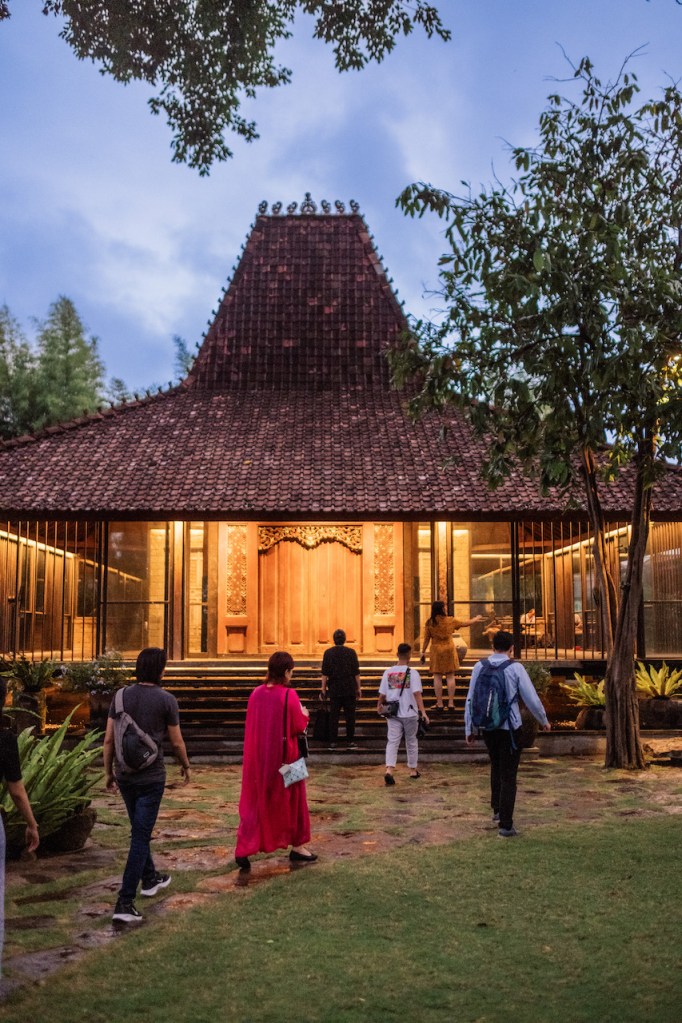
MFAFP participants at Bersama Space, Tony Raka Art Gallery, Ubud, Day Three
Philosophies, Rhythms & Cycles
Immersion in the Balinese culture offered learning points to enable the participants to reflect upon their identity, artistic practices and the Balinese worldview and mindset. Workshops during the first three days led by Yudha Bantono, Marco Kusumawijaya, Shahrul Jamili, Kamin Lertchaiprasert, Agung Prianta and myself led to the introduction of the philosophies of Rwa Bhineda, Buang Agung-Buana, Alit, Sekala-Niskala and Tri Hita Kirana and cultural information models such as the Nawasanga Mandala.
The Balinese believe that two opposite and opposing forces are required to maintain universal balance. This is the concept of Rwa Bhineda; an eternal duality that enables the cosmic balance of the universe. Birth and destruction, good and evil, joy and sadness, and positive and negative are essential dualistic states. Buana Agung – Buana Alit defines the relationship between the larger and smaller physical spaces, the heavens, the macro, and humanity, the microcosm. As above, so below. Cosmic cycles impact upon human experience.
Sekala-Niskala describes the duality and interconnectedness of existence’s visible and invisible aspects. The non-physical world of the ancestors, nature spirits and the gods is equally essential as the material, visual world. Tri Hita Kirana explains the three reasons for human prosperity: harmony with God, harmony among people and the natural environment. The Nawasanga Mandala is akin to the colour wheel and structured upon the cardinal directions, its function is layered and multi-dimensional. It is a sacred mandala of the world that maps all aspects of reality.
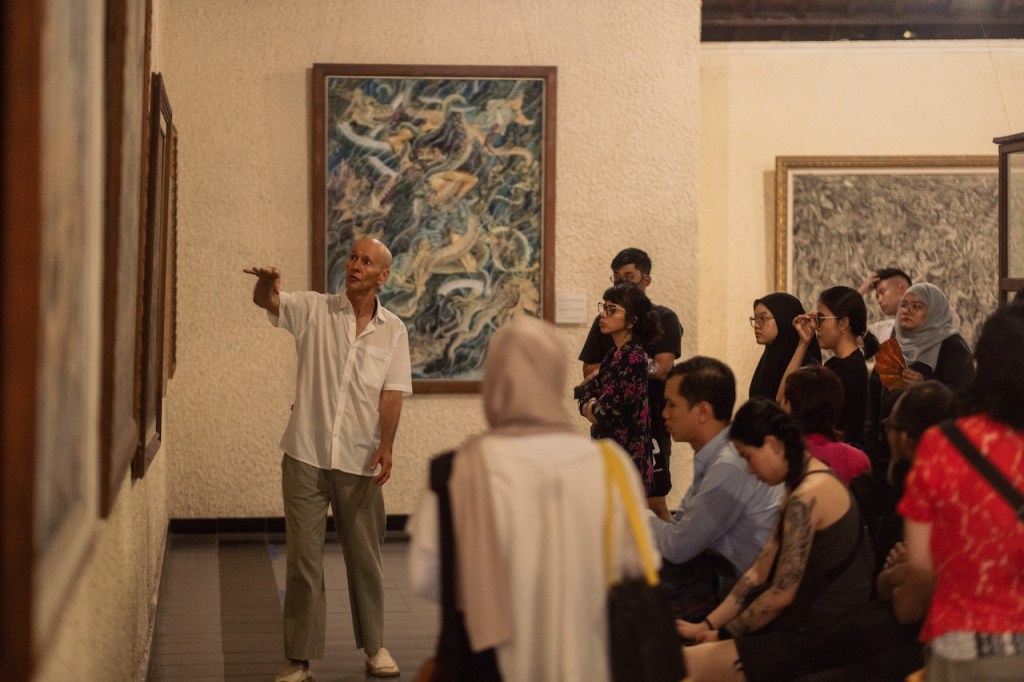
Richard Horstman highlights Balinese modern art distinctions with the MFAFP participants during a discussion at Ubud’s Museum Puri Lukisan
The significant theme of Day Three was the emphasis on rhythms and cycles as fundamental to life according to Balinese culture. A discussion on the art collection of Museum Puri Lukisan, led by this writer, described Balinese art’s linear graphic technical style from the sacred symbolic drawings and Wayang narrative paintings to the modern Balinese paintings of the past century. The visual rhythms, especially in the modern Wayang paintings of noted artist I Gusti Ketut Kobot (1917-1999), were a highlight in the museum collection.
The mesmerising rhythms of Balinese traditional music are introduced to the unborn child as part of significant lifecycle ceremonies conducted before birth. Music is an essential aspect of ceremonies, festivals, theatre and performance for both the Sekala and Niskala realms. Musician and composer Putu Adi Septa led the MFAFP participants in a gamelan ensemble workshop offering the sonic thrill of unity through music making.
Late afternoon and evening workshops and a tour hosted by Tony Raka at his wonderful gallery of Indonesian contemporary art alongside tribal art and Bersama Space in Ubud culminated the day’s activities. Workshops by Eriko Kimura and Taro Amano offered insights into the Japanese art world’s institutional curatorial practices, followed by dinner at the Tony Raka Art Lounge.
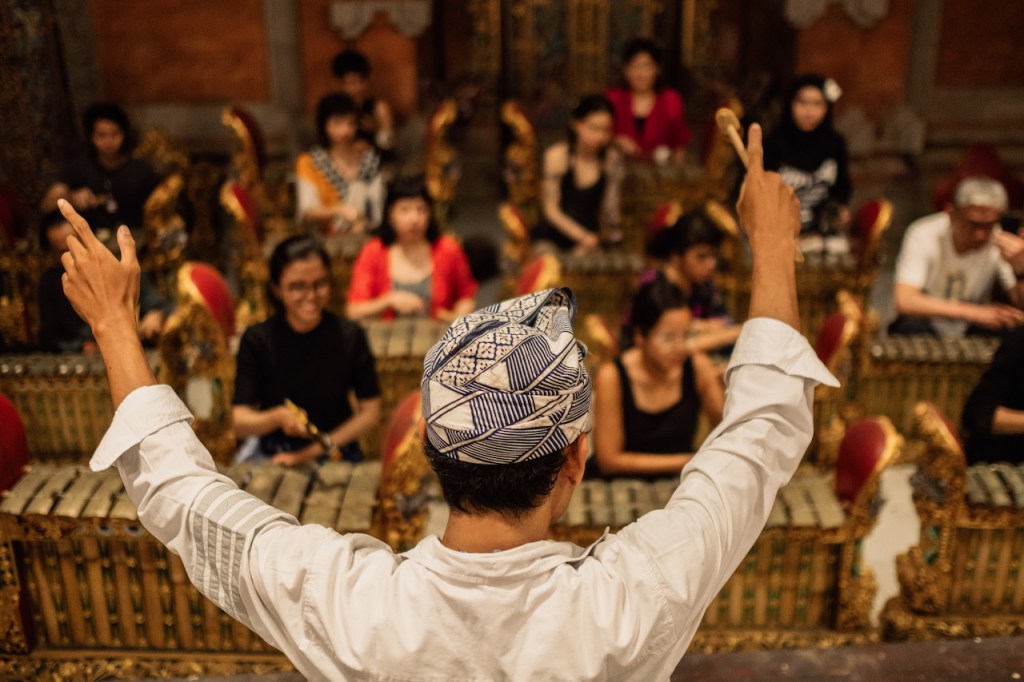
Musician and composer Putu Septa Adi leads the MFAFP participants through and exhilarating Balinese gamelan ensemble workshop
Jindee Chua and Suriawati Qiu led the morning activities of Day Four at Denpasar’s art and design epicentre CushCush Gallery (CCG). They detailed CCG’s vision and mission in sustainability, exploration, experimentation and creation utilizing abundant indigenous materials, textures, techniques and traditional crafts of Bali.
Afternoon activities began with an in-house tour of traditional textiles, Indonesian cultural icons and cuisine at Masa Masa in Ketewel, Sukawati. David Chew then enlightened the group by discussing his various National Heritage Board Singapore roles, including the curation of past large-scale projects and how artists should better comprehend the viewpoint of the bureaucracy. The afternoon culminated with Marco Kusumawijaya expressing how artists could adapt the Balinese Nawasanga Mandala as a strategy and reflective tool in their practice and Khai Hori sharing on the significance of having a personal vision statement and purpose as an artist.
The MFAFP closing oceanside dinner at Timur Kitchen at Komaneka Resort, Keramas, featured a magical lightning storm during an overcast colourful sunset and a final opportunity for participants to enjoy and reflect upon their memorable experience. Khai Hori hosted the concluding address and invited the artists to share feedback about some of their most potent memories of the four-day program.
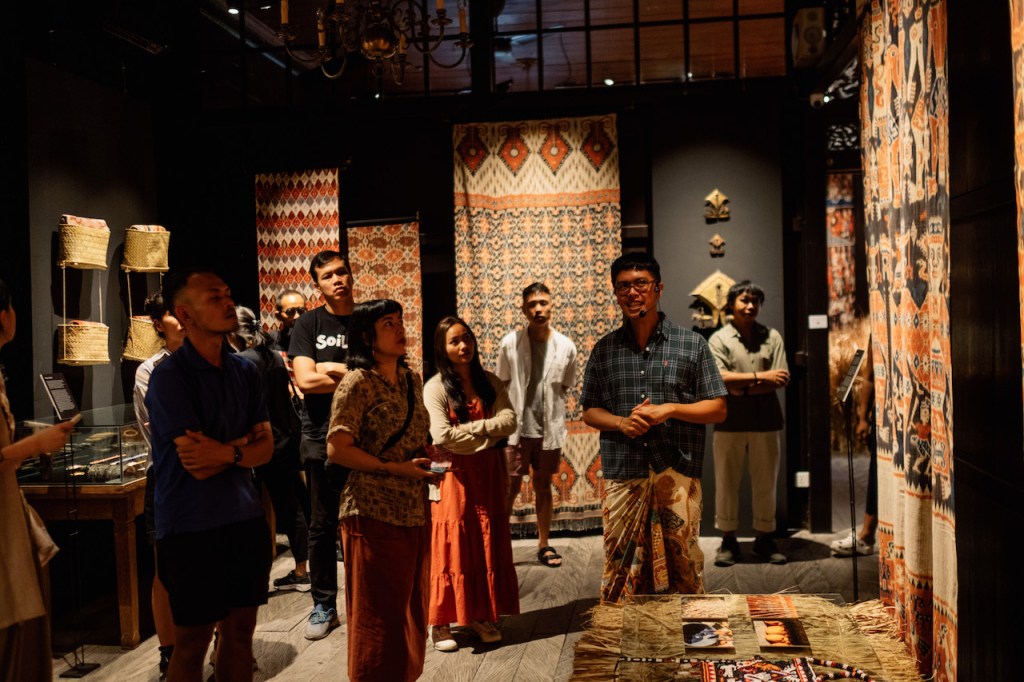
An in-house tour at Masa Masa highlighted Indonesian traditional textiles, Day Four
Bali: A Sanctuary of Cross-Cultural Learning
Bali has served international artists and the global community for a century as an acclaimed destination and epicentre of cross-cultural learning, creativity, recreation and transformation. Renowned for its nurturing mother spirit, where the veil between the seen and unseen worlds is delicate, Bali offers a unique perspective in celebrating human endurance through a dynamic traditional culture that has absorbed outside influences as it has evolved. As an influential art historical and spiritual intersection of Southeast Asian modern art, Bali provides a potent fertile environment for artists to absorb abundant information and ignite inspiration ripe for contemporary engagements and reflections.
A unique historical narrative distinguishes Bali beginning in the 1920s, with talented and famous international creatives and adventurers who visited or called the island home during the first wave of tourism, culminating in 1942 with the Japanese invasion of Indonesia in WWII. This phenomenon continued during the 1950s until today. Some of the early famous and influential characters included Charlie Chaplin, the renowned anthropologist Margaret Mead & Gregory Bateson, the Mexican illustrator and author Miguel Covarrubias and, of course, the iconic Walter Spies and Rudolf Bonnett, who were the leading foreign contributors to the development of Balinese modern art. These figures and others helped immortalize the popular image of Bali as an idyllic tropical paradise in Southeast Asia.
“This came out quite strong in MFAFP when various mentors pointed to the influence of foreign artists who came and settled in Bali since the early 1920s and how tourism and the economic machine that came with it impacted the spiritual core and output of Balinese artists. There was a strong collective call to review the unceasing desire for a western styled ‘formalisation’ of art, its presentation and acknowledgement from validating international power centres,” Khai stated, and continues, “The fact that the development of modern art in Bali is now touching its centurial mark makes it absolutely ripe and absolutely necessary for local, Southeast Asian and international artworld stakeholders to revisit and find learning points from.”
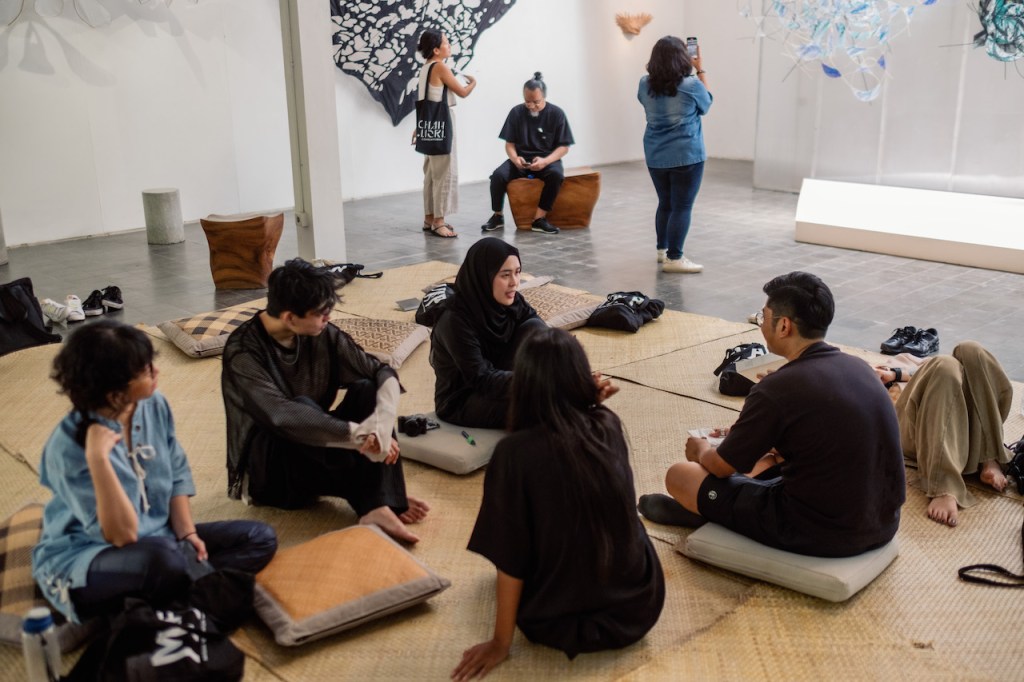
Artist interaction at CushCush Gallery, Denpasar, Day Four
The international art development that flourished in Bali was not all Euro-centric. The island’s aura was also attracting critical figures from the Asian region. “In 1952, Cheong Soo Pieng, together with fellow artists, Liu Kang, Chen Wen Hsi, Chen Chong Swee, Chong Soo Pieng, undertook a painting learning expedition to Indonesia and Bali. This trip inspired new approaches to art and new subject matter. It is widely regarded as one of the defining events in the emergence of ‘Nanyang art’. These four artists organized an exhibition titled “Four Artists to Bali” upon their return.” (T.K. Sabapathy, “Pictorial Vocabulary,” The Straits Times, 6 October 1980).
“A key effect of the 1952 Bali trip was the way it focused artists’ attention on the richness of Balinese culture, and helped propagate the use of Southeast Asian material culture as an inspiration for art.” (Ong Zhen Min, “Nanyang Reverie,” Siapa Nama Kamu? Art in Singapore Since the 19th Century, 48).
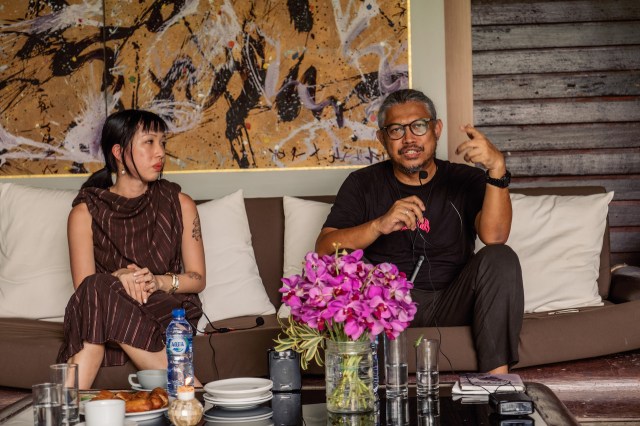
Denise Lai hosts a discussion with Ade Darmawan, Art Director of Ruang Rupa, Jakarta Bieannle and Curator of Documenta 15 Day Two
“First of all, convincing the Board of Trustees of the Maybank Foundation to conduct the fellowship in Bali was quite a task. Bali is mostly known to many as a tourist and party destination, not a destination where contemporary art programmes are launched,” Khai told me. “I have been studying aspects of Balinese art and culture since I was a student in the early 1990s. In my opinion, it is definitely worth looking deeper into Balinese culture and events in its modern and contemporary art development, beyond the façade it is commonly projected to Southeast Asia and internationally.”
Artist Responses to MFAFP
“It reinforces my relationship as an artist to my studio practice. There are times when it gets scary when making artwork and times when I doubt the work I do or the kinds of work I want to put out– but this short fellowship programme eases the feelings I initially had,” said Sarah Radzi about how she benefitted from the MFAFP. “Exchanging artist experiences, inputs from the mentors, and the conversations in between put things into perspective for me as an artist navigating the art scene.”
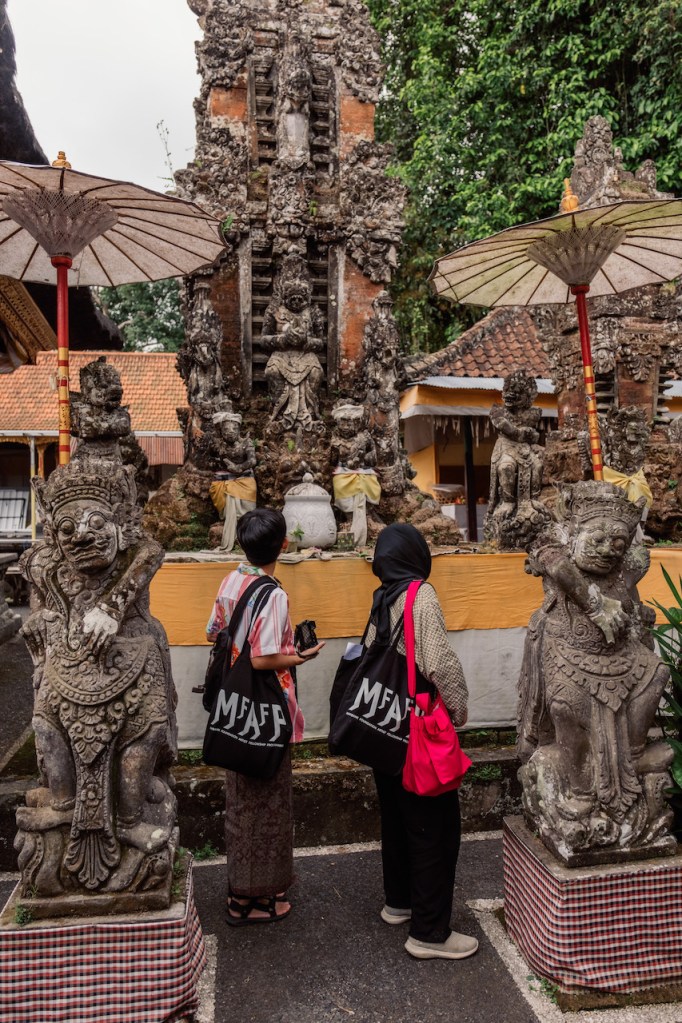
MFAFP participants at Pura Luhur Natar Sari Temple, Apuan, Central Bali Day Two
“I can say there are so many aspects about Bali as an art historical and spiritual node to Southeast Asia modern art. What I liked the most about my time there was the Balinese way of living harmoniously with nature. I was inspired by that tremendously. It made me reflect on my work as an artist and what kind of work I will do in the future,” said Chang Shanghai. “As for being invited to be part of MFAFP, this is the first international fellowship. A big milestone in my career.”
“Upon reflection on my daily life, I found this concept to be truly interesting, as secular living has largely divorced these elements from one another. Art in this Balinese context has a practical and fundamental role where humans and gods need to work together to foster a harmonious environment. This framework is truly something I would explore more in my work,” said Blank Malaysia about the philosophy of Tri Hita Kirana.
Reflections on MFAFP
Artists witness eternal cycles: birth, destruction and then renewal. Each of these phenomena is fertile for contemplation and imaginative responses. Natural successions are potent with alchemy, an essential that generates prospects for artists to identify opportunities, innovate and explore their potential. During the MFAFP, the past, present and future intertwine. Bali’s unique creative and spiritual aura allows transformative possibilities that few other locations on the planet do.
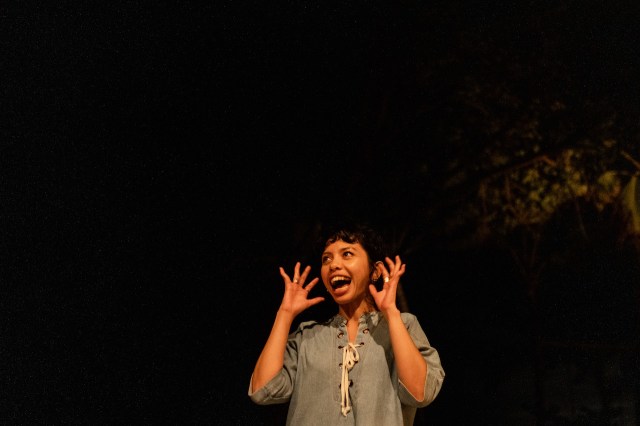
Ruth Marbun shares about her MFAFP experience during the final group gathering at Timur Kitchen, Day Four
“The purpose of our potential is to transcend our limited thinking and to bring us into super human or cosmic consciousness. What are we capable of? When you look at yourself in the mirror do you see yourself now, or who you are capable of becoming? See more in the mirror than is staring back at you. You are far more than flesh and blood. You are the potential of the universal mind.” Greg Braden, American author, scientist, educator and pioneer in the emerging paradigm bridging science, social policy and human potential.
The art world requires original experimental models to help propel contemporary art into the new paradigm. MFAFP set new precedents in what is possible to help nurture creativity and artistic potential.
“This model of ‘workshopping’ and professional training is rather unusual in the art world where professionals are invited to conduct lectures in rooms and rarely respond to the local landscape, its histories, issues and lost knowledge. This extremely immersive approach is, to me, what makes a fellowship such as HAO and MFAFP worth talking about, exploring and continuing with,” Khai stated. “Patrons such as Maybank Foundation understand that its outcomes will not be immediate, and we need more of such patrons to support experimental and free-flowing ideas given the state-of-the-art world highly dominated by market talk and the thirst for spectacles.”
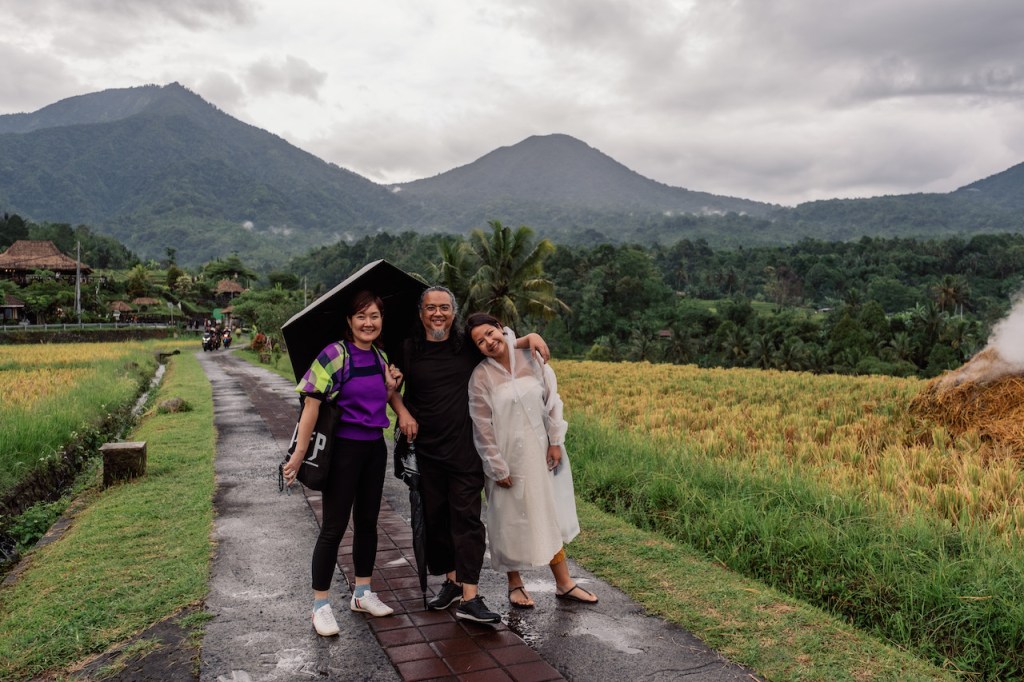
Eriko Kimura, Khai Hori and Khai’s wife Gusti at Jati Luwih Rice Terraces and Subak Irrigation System in Tabanan.
MFAFP reflects the senior generations’ trust, belief and commitment to the emerging artists, instilling knowledge and confidence. While the outcomes of MFAFP are challenging to predict, the act of bestowing such goodwill upon them will have a lasting positive impression.
“If we are dominated by the uncreative, by the jealous, then we will destroy all the talented people. And they are the real people; they are the people that raise humanity to higher levels. Humanity owes all its growth to very few people and not the masses – not at all.” Ohso (1913-1990) Indian philosopher and mystic
Artists play essential future roles in the well-being of humanity during this unprecedented era of global change. We must nurture their creativity at any opportunity. For those with a vision every moment is golden.
A special mention of gratitude must go to the highly professional, fun-loving team supporting Khai Hori during MFAFP of Distry Astari, Agni Sunarya, Naylie Fir Daus and Lewin Bernard.
Richard Horstman February 2024
Images Courtesy of Chan + Hori Contemporary
Photos by Agung Parameswara
Follow Richard on Instagram @lifeasartasia
*No part of the written content of this website may be copied or reproduced in any form, along with article links uploaded to other websites, for any commercial purposes without the written permission of the author. Copyright 2024
 life as art asia