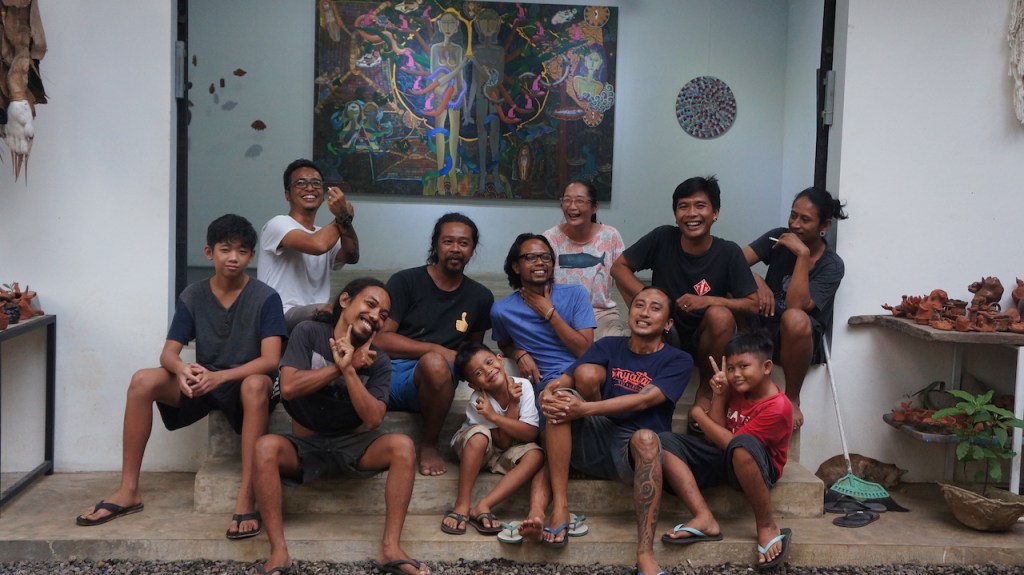
During a crisis human ingenuity comes to the fore. Kelompok Seni Gotong Royong, a new Balinese art collective adopting cultural philosophies began in 2020 in response to the global economic downturn resulting from the pandemic. Its initial objective was to feed the families of the group’s members. Its vision has evolved to community art and cultural education and sharing with those in need.
“A few months into the pandemic, the local economy began spiralling downward with the closure of international tourism. As a result, there were real concerns among my artist friends,” Kelompok Seni Gotong Royong (KSGR) co-founder Rio Saren told the Jakarta Post. “These anxieties were the catalyst to forming KSGR.”
“A radical shift in mindset was required to combat an uncertain future and the challenges of generating a sustainable income. We had to scrutinize the understanding of our potential and how we may thrive into the future.”
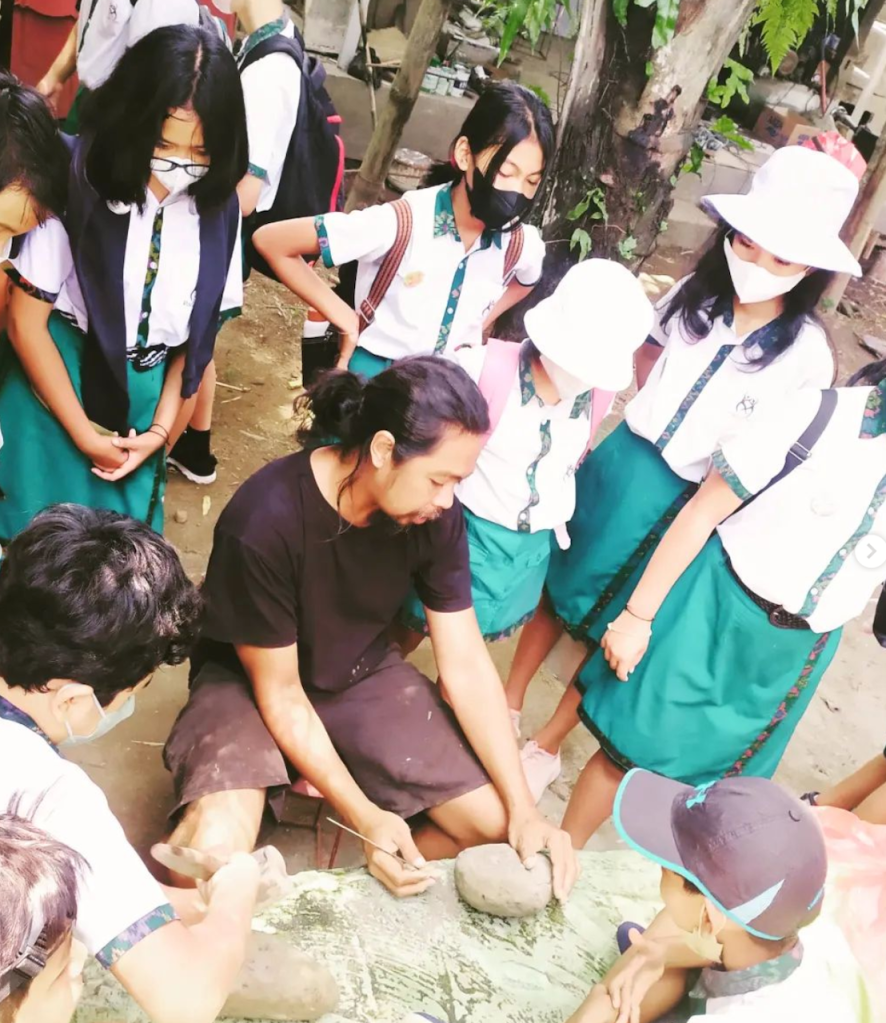
KSGR co-founder Rio Saren with students from Bali Hati School.
“Balinese art once functioned purely to serve the community. However, the movement away from the sacred with the development of the commercial art world over the last century led to art becoming political and exclusive. As a result, many were marginalized, with only a limited amount of artists attaining success,” said Saren, who graduated from the Indonesian Art Institute (ISI) Denpasar in 2008. “We readdressed our art practices focusing on what was lost from our culture due to modernity.”
Established in May 2020, KSGR’s objectives are to realize new forms of value creation inspired by the wisdom of their heritage, with sustainability and cultural regeneration as essential priorities. The collectives name, Gotong Royong, is derived from the village fundamental of communal sharing. The administrative system of the Banjar structure is the collective’s defining model.

Australian tourist Sue Xu Ding (right) working with terracotta during a KSGR Sunday community workshop with KSGR member Nyoman ‘Pimen’ Sukariana.
KSGR’s Sunday gatherings at Pintu Saren Art Space, at the rear of Saren’s family compound in Sibangkaja, Badung, are a supportive environment for the members to discuss ideas related to the group and their studio practice. In addition, the preparation and partaking of food is a celebration and form of gratitude for their blessings. The Garam Dapur Project (Salt Kitchen) is an outcome of these discussions.
“An open space for preparing food and sharing ideas, Garam Dapur’s emphasis is on learning, experimentation, and presenting exhibitions,” Saren explained. “We then set out to develop another idea, to generate a sustainable income by reviving traditional terracotta practices and creating functional, one-of-a-kind artisan products to sell. The abundant natural material is sourced locally at a minimal charge making it cost-effective. The firing process is done on-site in a Balinese kiln.”
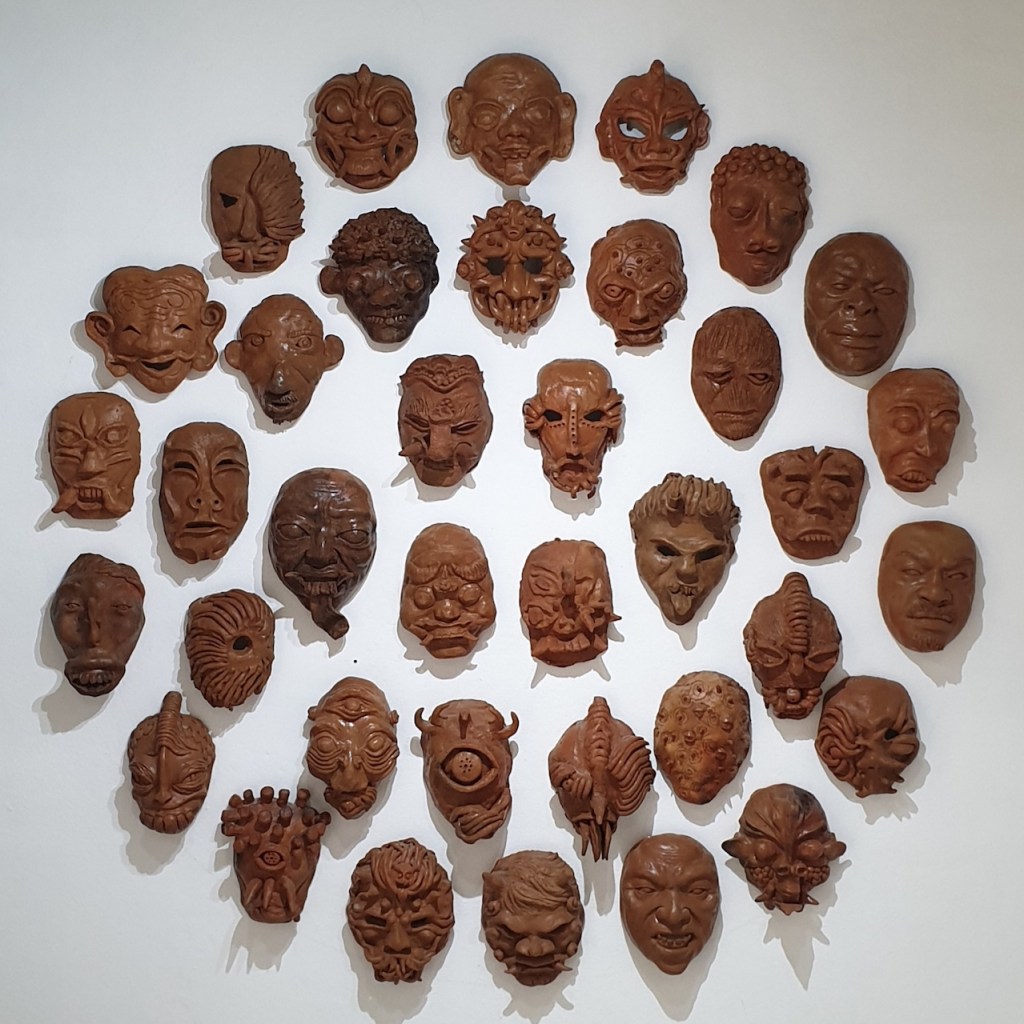
‘Topeng Pandemi’ 2021-2022 An installation of terracota masks made by KSGR and school children on display at Pintu Saren Art Space. Image Richard Horstman
In 2021 KSGR began facilitating mid-week workshops to school groups for a minimal charge. Participating schools include Bali Hati School, Seva Karuna, Sekolah TK Kumara Dharmayasa, SDN (Sekolah Desa Negeri) 3 Sibang Kaja and the Green School Bali. The Green School group has been ongoing throughout 2022.
In February 2022 Sunday, by donation, workshops for local adults and children started. Each with different themes. The participants included expatriates and tourists. The afternoon concludes with the sharing of traditional food. As a result, awareness of KSGR is spreading, and people travel from Denpasar and Mengwi to enjoy the unique experience. “KSGR’s activities make a relevant cultural contribution. Especially when we see kids who want to play games on their cell phones, forget their digital distractions, and concentrate on learning and being creative,” said Saren’s wife, artist and mother, Sumie.
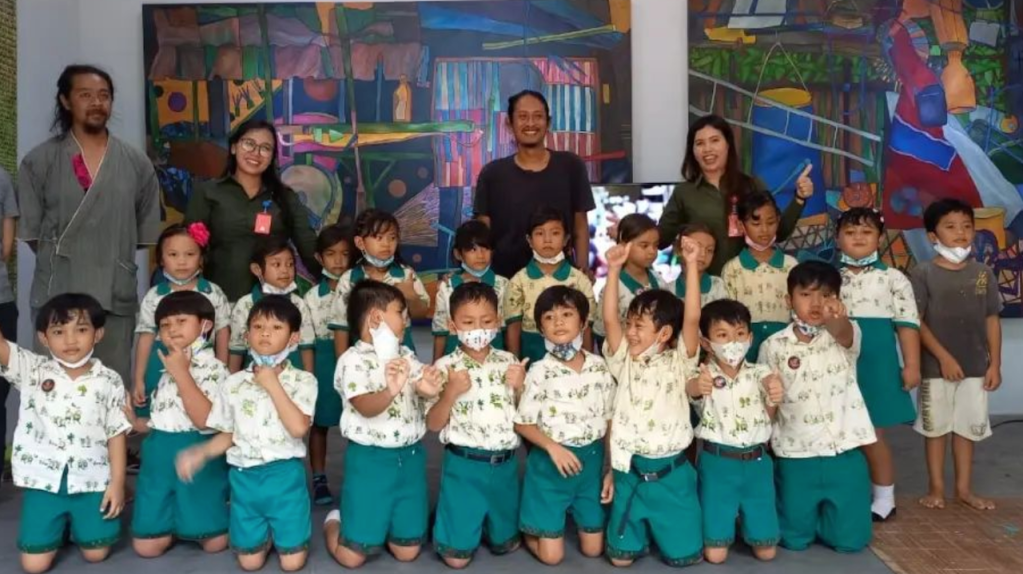
Students and teachers from Bali Hati School with KSGR members Rio Saren and Nyoman ‘Pimen’ Sukariana at Pintu Saren Art Space.
“Making art traditionally using raw materials is relaxing and makes you feel down to earth again,” said twenty-seven-year-old Australian tourist Sue Xu Ding. “The by-donation system was a welcome surprise; I believe it is a proper art method. It allows participants to evaluate their experience and respond by paying what they feel is right.”
Saren is currently in discussions with the chairman of the committee of SDN (Sekolah Desa Negeri) 3 Sibang Kaja, Komang Suryawan, to develop a permanent ongoing sustainable program for all schools, especially for the early childhood age group, in Sibangkaja. “I wish to capitalise upon every potential and resource within my village to help develop a more prosperous community,” said Suryawan, who has a tourism background and is the founder of the Edan Community, a social and environmental initiative.
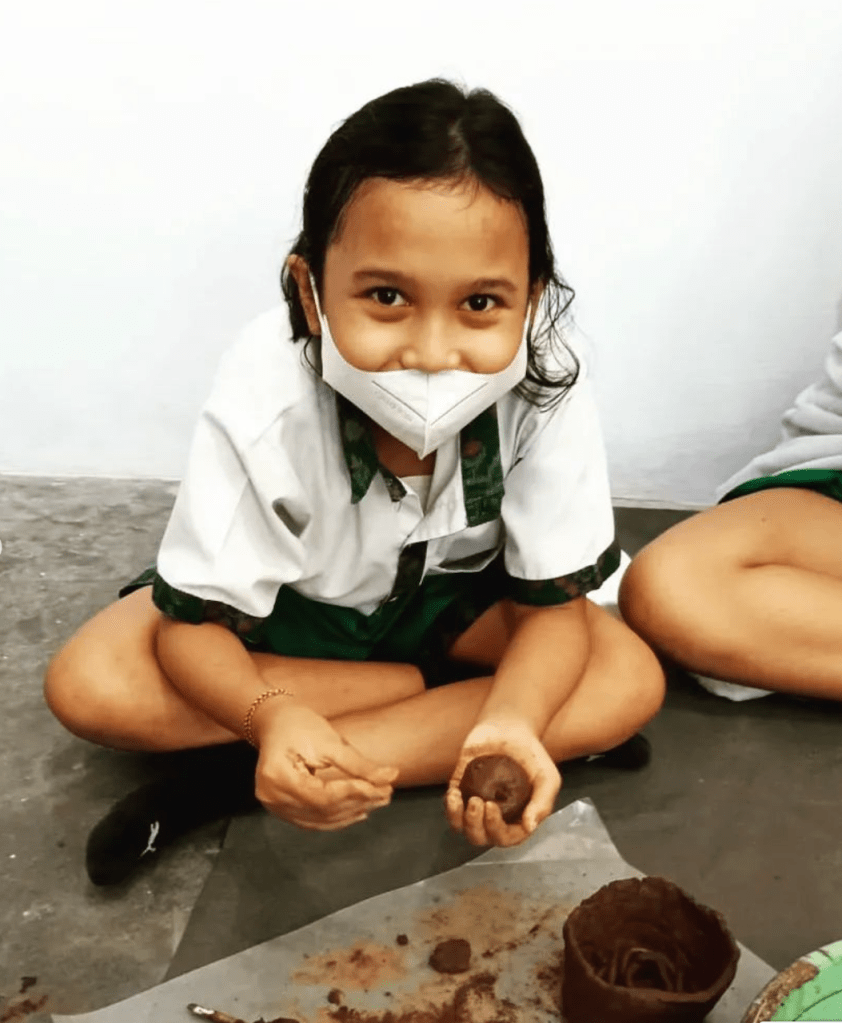
A satisfied participant during a KSGR terracotta workshop.
“Education occurs not only in schools. Every environment is a space for learning. KSGR introduces new opportunities that can function side-by-side with the government curriculum, said Surya, who lives nearby Saren. It is essential to foster the creativity of the younger generation. I hope that this program allows students to have the freedom to express their own ideas.”
Collectives have directed the development of Balinese art. Classical Balinese religious paintings were created within unique communities called sanggings. From the 1920s, new commercial opportunities led to the formation of the first modern collectives and distinct ‘schools’ or village styles of art developed to capture the burgeoning tourist market. Contemporary art collectives began in the 1970s and continue to do so today. Their objectives, however, focus on discussing art ideas and how to capitalize upon the market. Proceeds of art sales go to the artist only.

School children with KSGR members during a terracotta workshop at Pintu Saren Art Space.
Social media has effectively raised KSGR’s and the artist’s profiles, especially on Facebook, with the artists enjoying increased sales from the exposure. Both KSGR workshop models have proven popular, and the collective members receive a monthly allowance to pay for all their art materials in their personal practice. Sales of the KSGR member’s art from Pintu Saren Art Space generate income for the collective. Transparency is paramount. Therefore, KSGR offers their monthly financial report to public scrutiny. KSGR’s function has recently grown, donating money to a Sibangkaja resident in urgent need of medical attention.
Words: Richard Horstman
Images: Courtesy of KSGR
Follow Richard on Instagram @lifeasartasia
No part of the written content of this website may be copied or reproduced in any form, along with article links uploaded to other websites, for any commercial purposes without the written permission of the author. Copyright 2024
 life as art asia