
A new era in Indonesian printmaking began in September 2021 with the opening of the DEVFTO Printmaking Institute at the Sika Gallery in Ubud. Established by Indonesia’s leading art printmaker Devy Ferdianto with over 30 years of experience, the knowledge of the techniques and materials is highly specific and varied. DEVFTO represents an exciting development in the Bali art infrastructure.
DEVFTO punctuated their presence in Bali with ‘Ubud Printmaking Week’ 6-11 September, conducting various workshops through the week well attended by local and foreign artists. “DEVFTO is defined as an institute to distinguish it from the other open printmaking studios in Indonesia,” Devy told me. “The tasks of open studios are as a studio available for rent by artists, facilitating workshops, doing commissions and editioning. However, they do not conduct research.”
“We are researching many technical aspects of the genre. For example, lithography (a process that uses a flat stone or metal plate on which the image areas are worked using a greasy substance so that the ink will adhere, while the non-image areas are made ink-repellent) has enormous variables and different elements. This requires expert education and guidance to achieve successful outcomes,” explained the Institute of Technology in Bandung (ITB), a West Java graduate who studied in institutions in Germany and Canada. “DEVFTO is experimenting within this evolving genre and seeking other technical alternatives. We are investigating with pigments, as the tropical biodiversity of Bali allows many resources to be drawn from. Also, the work behavour of graphic artist, while my son is researching paper making.”
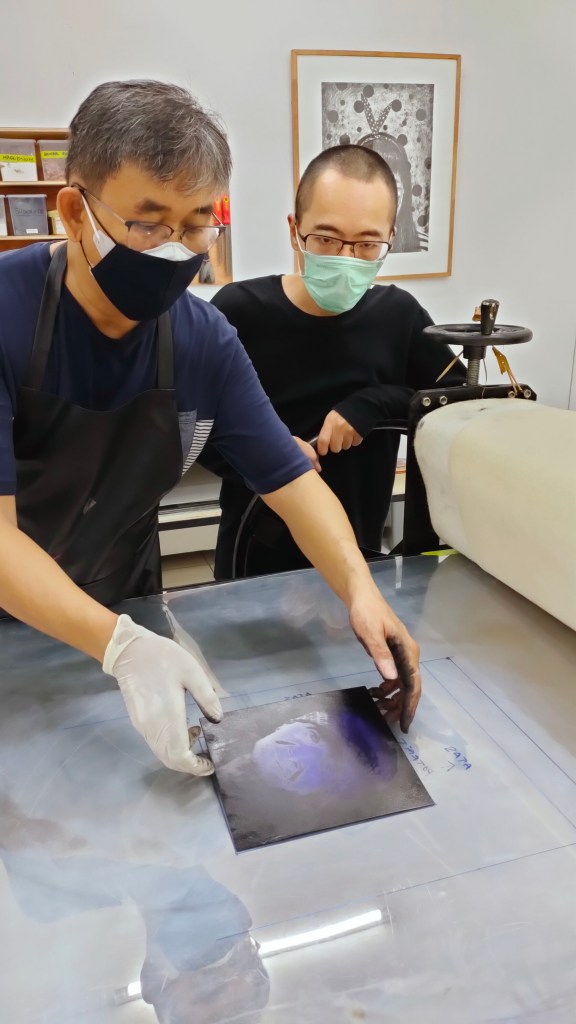
Devy Ferdianto, left, in action in the DEVFTO printmaking studio
Art printmaking has enormous potential in Indonesia. The genre, however, is not well developed due to a lack of education, equipment, materials and finance because it is an expensive genre to produce. “Indonesian culture, especially in Bali has colorful history. There are, however, enormous gaps in the development of Indonesian print making which DEVFTO cannot eradicate alone. Nevertheless, we can begin the process. First, we need more open studios. Then, DEVFTO can be the model for others to follow,” stated Devy, born in West Java in 1968 and has lectured and freelanced his skills and knowledge to academics and organizations throughout the country.
Collectors of Indonesian modern and contemporary art are the economic drivers of the Indonesian art ecosystem. However, incorrect perception of printmaking by collectors and the public, along with the lack of academic direction and teaching and the market being without choices, has hindered the genre’s popularity. “The major barrier to the market’s growth is it is difficult to convince collectors to buy print works due to the deterioration of paper in the tropical humidity,” Devy said.
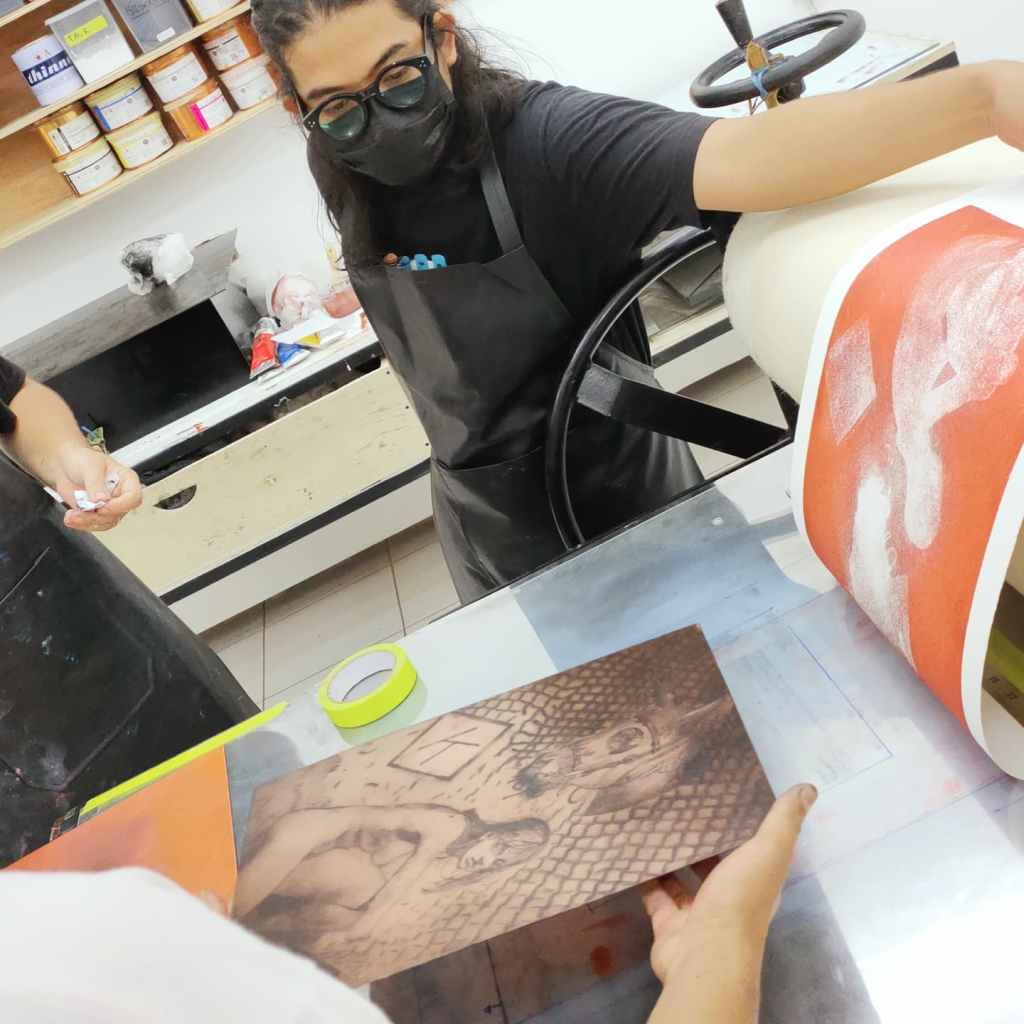
The DEVFTO team at work
The preservation of paper works begins with the correct framing techniques. Acid-free surfaces, laying the paper directly to plastic or aluminium and other seals are available and are cost-effective solutions. The irony is that collectors willingly purchase Japanese prints on traditional handmade paper and paintings on paper by iconic Dutch colourist Arie Smit (1916-2016) for up to USD 55,000.
“There is confusion about printing processes, and collectors don’t understand that works are individual pieces and not copies,” Devy explained. “Each print has its own technical procedure; multi originals are not simply applying ink to the plate and then repeatedly pressing out works. Unfortunately, the term multi-original is not accepted within the mindset.”

Swedish expatriate artist Richard Winkler at DEVFTO printmaking studio
One of DEVFTO’s missions is to educate the public and art collectors. “We will describe the narrative of what is Indonesian printmaking, define its historical distinctions and clarify the enormous array of variations of the printing genre. Through our website and social media channels, we will become a resource centre sharing knowledge and experience. We are working with the Indonesian Art Gallery Association to help educate the market, and we plan to conduct specific tours for collectors to begin the transformation of the perception of printmaking.”
“Indonesian art academies do not allow easy access to the genre. There are no qualified personal and expertise to explain the technical processes, the value of printmaking, aesthetics, and commercial values. Therefore it’s essential to bring people into the studio and witness the process and learn more. This will distinguish DEVFTO’s educational responsibilities.”
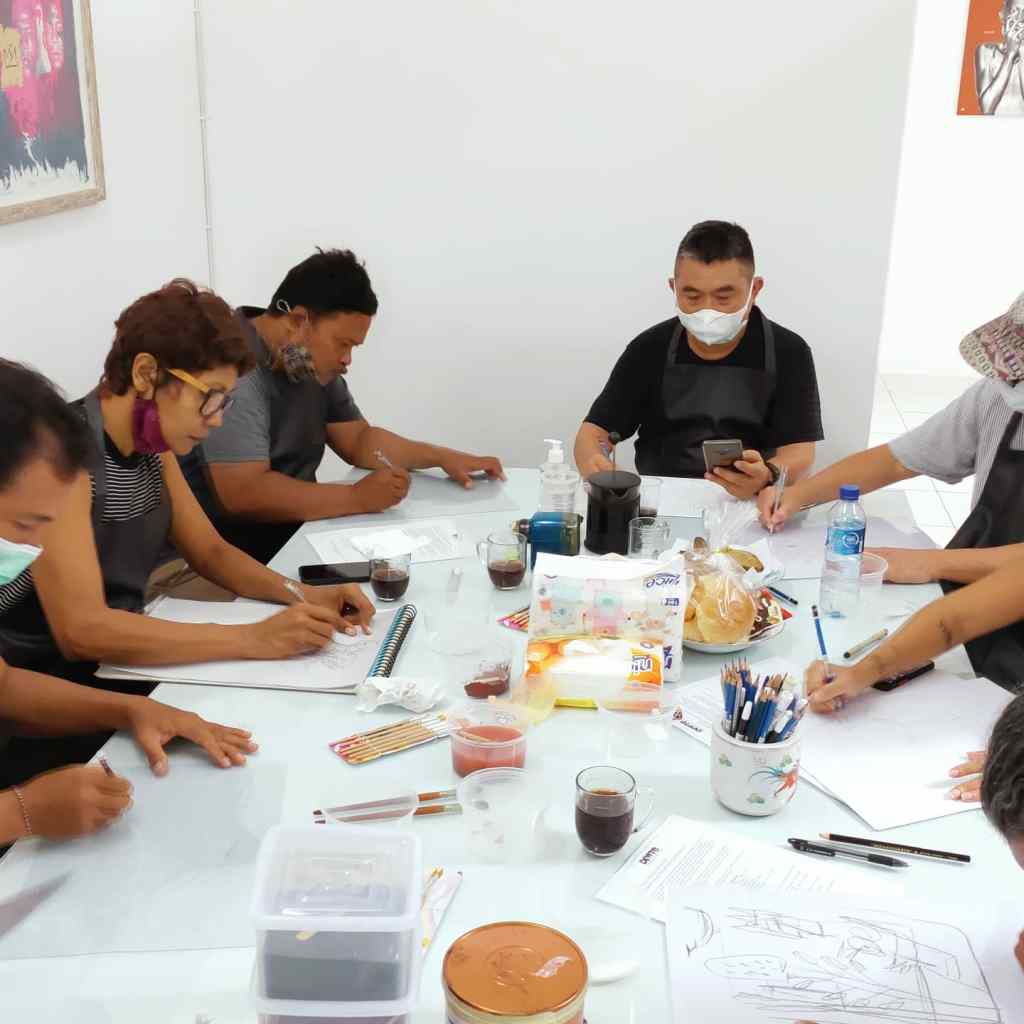
Artists Handy Saputra, Made Wiradana and Ni Nyoman Sani at work at DEVFTO printmaking studio
“I have been interested in exploring printmaking, yet there hasn’t been a facility for it. Until now,” said expatriate Swedish artist Richard Winkler, one of few foreigners to forge a successful career within the Indonesian art market. “I participated in an etching workshop which I found very exciting. It opened me to a fascinating new world. I can’t wait to explore other techniques to understand all the possibilities and what suits me and my expression the best.”
“I love to see sketches, drawings and all the spontaneous preparation work done before an actual artwork is created. In printmaking, I feel a more spontaneous process as the work evolves as you can’t do too many corrections,” Richard explained. “By experimenting with new tools and techniques, it forces me to modify how I create. New media and techniques are always challenging and exciting; it’s like fertilizer – new energy, new ideas and growth.”
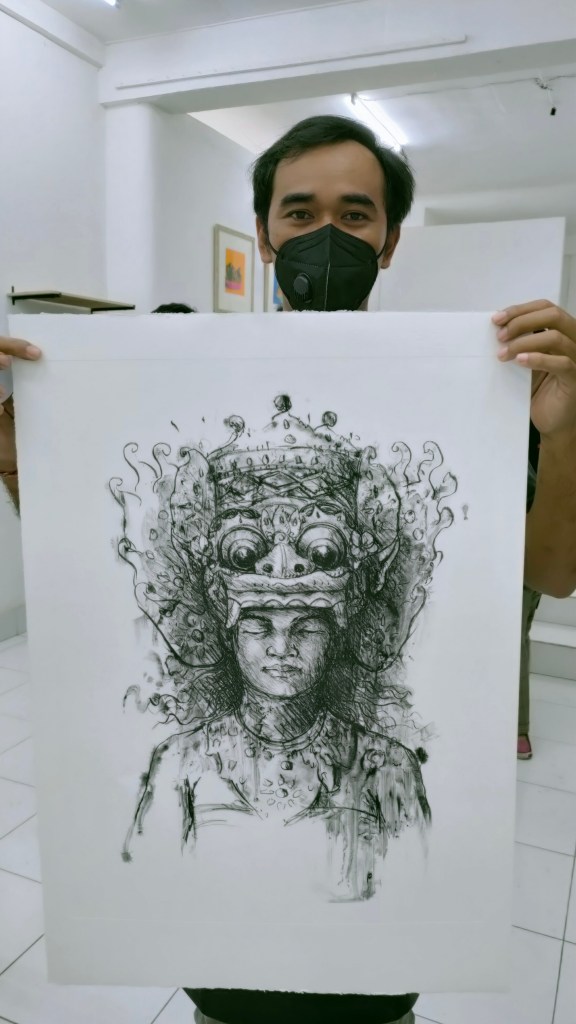
Balinese artist Wayan Upadana with new work completed at DEVFTO printmaking studio
“Buying print works is more accessible for a more significant portion of the Indonesian audience. They are much cheaper than buying original paintings or drawings and allow different price points to enter the market, enabling more people to collect art. It is also more interesting to have an art collection consisting of prints, paintings, drawings and sculptures.” Richard continues, “It’s important to educate the audience about the techniques, print works on paper, paper quality, etc. DEVFTO workshops and exhibitions would be inspiring for artists, collectors and art lovers.”
Following the passing of one of Bali’s pioneering contemporary artists, Wayan Sika (1949-2020) in January last year, founder of the island’s first avant-garde, non-commercial gallery, the Sika Contemporary Art Gallery in 1996, DEVFTO continues a vital legacy. Creating opportunities to foster artistic talent while increasing the development of the Bali art infrastructure. DEVFTO activities continue throughout October in Ubud, providing workshops open to the public in the Linocut, Screen Printing, Monocot, Cyanotype, Lithography 1&2, Softground etching and Photo-Intaglio techniques.
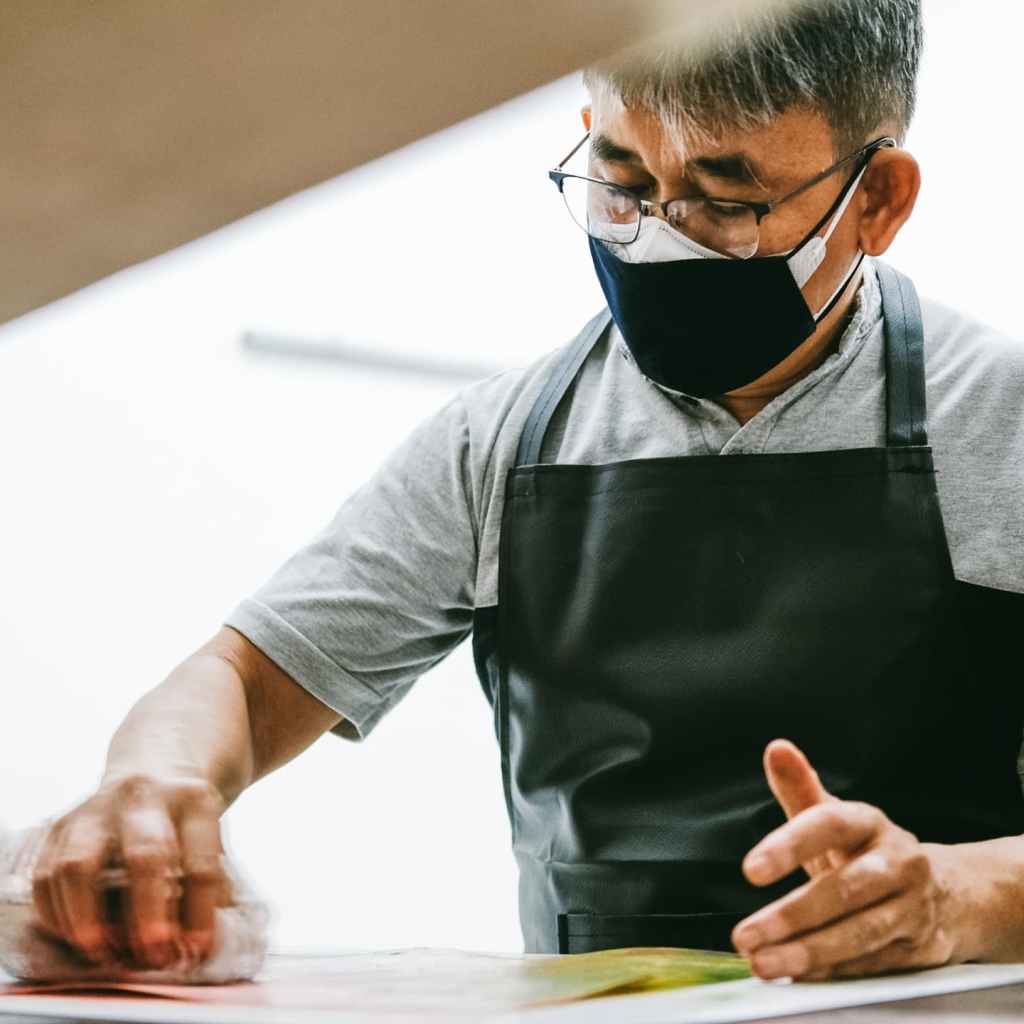
Devy Ferdianto at work in the DEVFTO printmaking studio at Sika Gallery, Ubud
DEVFTO Printmaking Institute
at Sika Gallery
Jl. Raya Campuhan
Ubud, Bali
Open Monday – Saturday: 10am – 6pm
Instagram: @devfto
Words: Richard Horstman
Images courtesy of DEVFTO
You can follow Richard on Instagram: lifeasartasia
 life as art asia