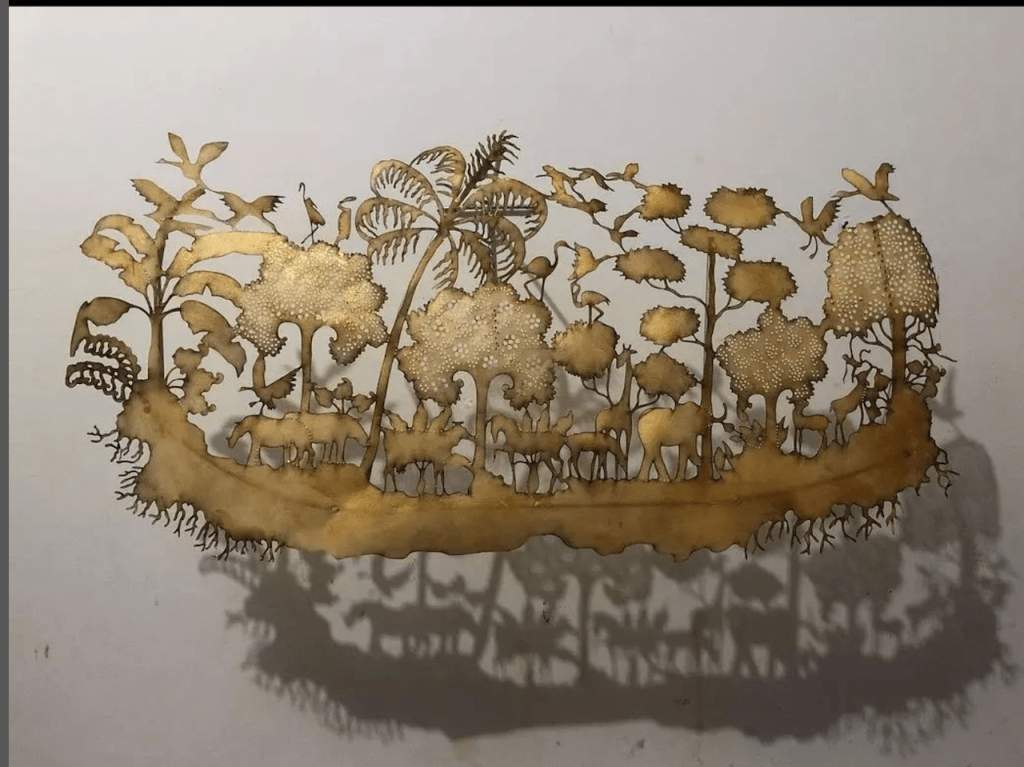
Gede Sukarya has a natural infinity with cows, a highly revered animal within his culture and village of Bulian, North Bali. His exploration into the potential of cowhide, outside of the iconic traditional conventions, realizes new possibilities in contemporary art expressions.
Cowhide, belulang in Balinese, upholds a distinction as an essential element in Balinese Hindu religious rituals. Leather-based ceremonial items are common, the Wayang Kulit shadow theatre being one of the most well-known rituals still practised today. Belulang is transformed into highly-decorative features of the Barong, topeng, performance masks and headdresses. The hide contains a philosophical dimension, honoured with spiritual values; the skin is processed untanned according to strict methods to maintain its sacred integrity.
Born in 1995 in Bulian, in the Buleleng regency, Sukarya’s village traditions adhere to an unusual, old custom. Aci Bulu Geles is an ancestor sacrificial ceremony involving cows in which each village boy must participate. Having grown up with a close association with the domesticated animal Sukarya has discovered an intuitive calling to investigate belulang as an artistic medium.
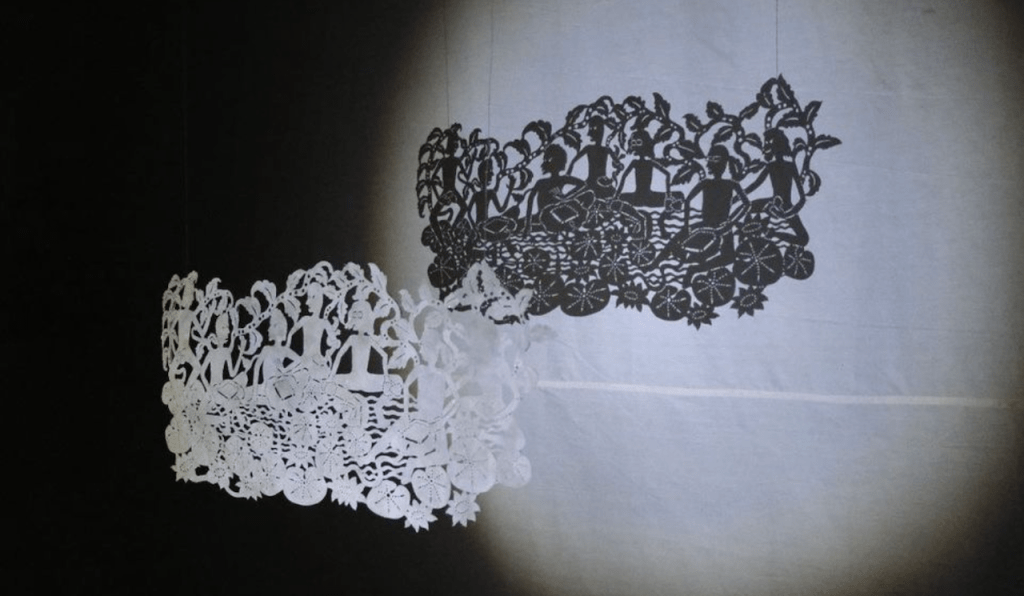
Sukarya’s works are inspired by the aesthetic impact of Wayang shadow puppet theater
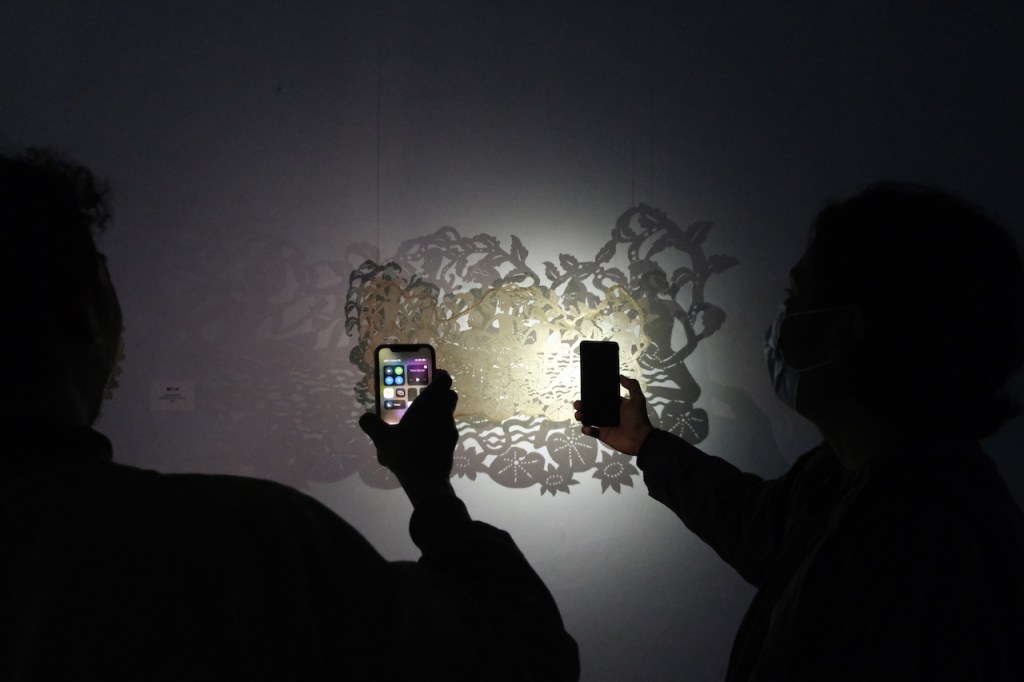
The outcome of the May 2022 artist-in-residency program, ‘Rasidency’ by Sukarya, was recently exhibited at Gelombang Studio, Batuan. ‘SKIN & SHADOWS: A Visual Study of Buleleng Ornament Style’, which closed on 31 July, featured nine works with flora, fauna and figurative motifs in an expressive style he is pioneering in the medium. Spotlighted to emphasize the silhouette, the works showcased Sukarya’s ability to achieve intricacy of form, which set ablaze the reflected shadows. Especially potent is the interaction between the negative and positives spaces within his compositions. Also exhibited were an array of drawings and monochrome prints.
A collaboration between the Gurat Art Project, an initiative of the independent Balinese cultural research group, Gurat Institute and Ruang Antara Studio, ‘Rasidency’, is a significant new addition to the Bali art infrastructure. The program offers Balinese artists the opportunity to develop their ideas through literature and fieldwork studies and organized and casual discussions over one month, culminating in an exhibition of the work.
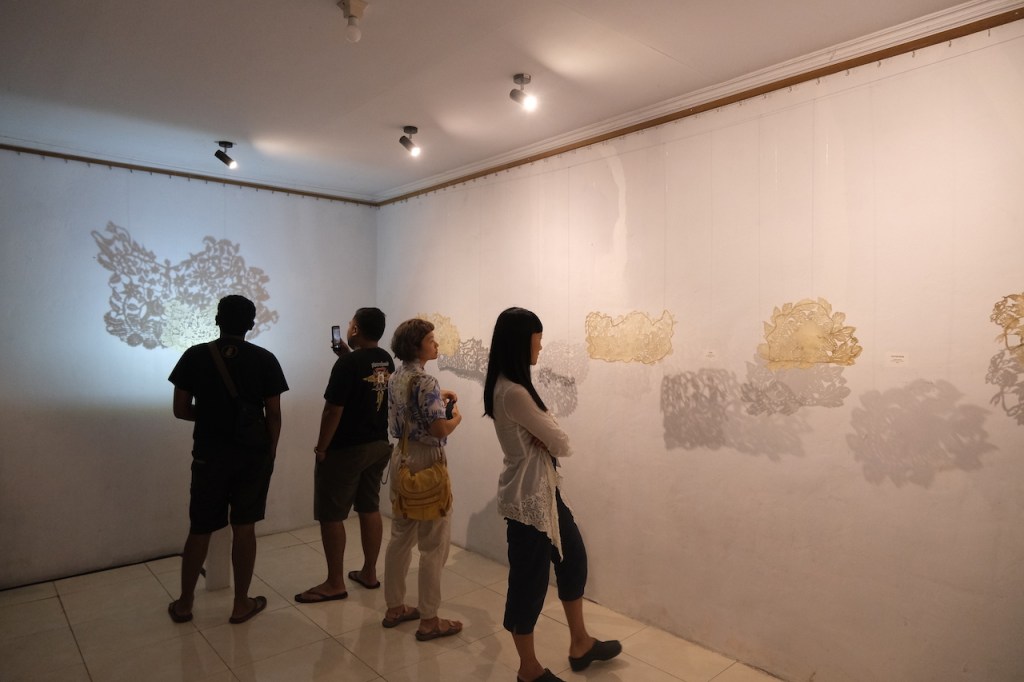
SKINS & SHADOWS: A Visual Study of the Buleleng Ornamental Style’ the exhibition closed 31 July 2022
“My introduction to working with cowhide came in 2018 from a friend’s father, who is a traditional leather carver. However, I found it difficult and tiring, especially on my eyes and neck, because the carvings are small,” Sukarya told the Jakarta Post. “I stopped temporarily, then began working again with greater commitment with another puppet artist in Denpasar.”
“While studying for my Batchelor’s Degree in Fine Arts at the Indonesian Art Institute (ISI) in Denpasar, I began an internship program focussing on belulang. I went on to select the material as the artistic object of my Final Project assessment at ISI in 2019,” he stated. Sukarya had previously displayed artistic talent in elementary school and continued to develop his skills and ideas by exploring cultural norms through painting at the High School of Visual Arts in Sukawati.
“One of my objectives during Rasidency was to uncover deeper aspects of my artistic identity. Therefore, I was compelled to investigate the traditional stone carving styles of north Bali, known as Blelengan, which are unique to the regency.” Within the Gurat Institute’s archives, Sukarya was able to reference ‘Nglesir Visual’, a 2009 documentation of architecture and sculpture of the Blelengan style.
“My fieldwork took me to temples in Buleleng and my village to observe and sketch the carving style. The Blelengan style is characterized by what the artist see around them in nature.” In comparison, the carving styles of southern Bali are defined by Patra, cultural guidelines describing how ornamental patterns of flowers and leaves may be expressed. “Blelengan avoids symmetrical compositions and allows the carvers to accentuate the abundant floral motifs with larger leaf sizes and other associated patterns of the vines. The artist’s individuality may shine through,” Sukarya explained.

A sketch on paper by Gede Surkarya
“The Rasidency program evolved responding to the artists wishing to explore and develop their ideas together in the spirit of collaboration with the Gurat Institute,” a researcher from the Gurat Institute, Vincent Chandra, stated. “There is no strict format. The artist’s work in the Gurat headquarters at Ruang Antara Studio, Batubulan. They are supported to enrich their ideas through our archives, network, research excursions and human resources. Gurat’s goal is to set them on the correct path.”
Sukarya’s technical process requires patience and skill. The composition is first sketched upon the medium, then using a hammer and pangotok (chisel), the hide is incised. A single work may take from one to two days to complete. “Cowhide’s character differs from other media in terms of texture and natural colour. It is a testing medium to process into a work of art. The high price of leather is also a challenge, so I often use the leftovers given to me by the craftsman. Sitting for long periods carving impacts my body causing fatigue,” he adds.
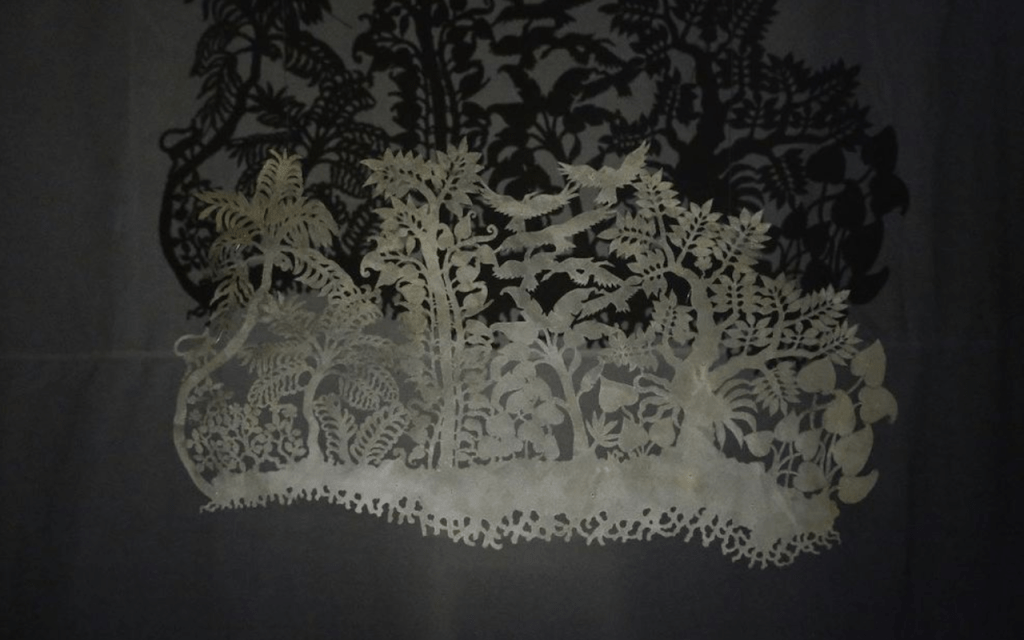
The Blelengan style avoids symmetrical compositions and allows the carvers to accentuate the abundant floral motifs with larger leaf sizes and other associated patterns of the vines.
“The residency’s greatest benefit to me was the introduction of research into my creative process. Previously I worked in the studio without applying a depth of thematic content into the work, only possible through investigation. This process will influence and improve my future work. The interaction and feedback with other artists and friends during the program was also valuable.”
The Gurat Institute began in 2014, researching and archiving Balinese art and culture and has progressed becoming increasingly interactive while helping to bridge gaps in the local art infrastructure. Rasidency helps unearth new possibilities within Balinese contemporary art expression. Sukarya’s creative exploration opens the door for others to further experiment with traditional mediums and fresh and culturally relevant thematic content.
Words: Richard Horstman
Images: Courtesy of Gurat Institute and Richard Horstman
Follow Richard on Instagram @lifeasartasia
*Author’s note: No part of the written content of this website may be copied or reproduced in any form, including article links uploaded to other websites, for any commercial purposes without the written permission of the author. Copyright 2024
 life as art asia