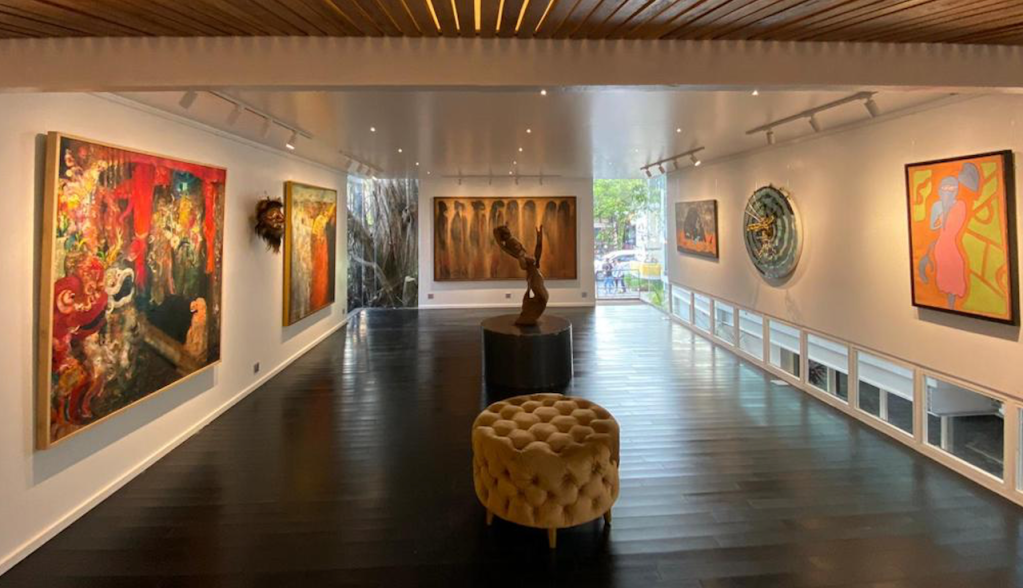
Pay As You Wish (PAYW) is a revolutionary transaction strategy where the buyers determine the price of the artwork. It gives every individual a chance to own a piece of art based on what they can afford to pay. In October 2017, Yayasan TiTian Bali (TiTian Bali Foundation, known as YTB) introduced PAYW to sell art in the ‘Nawa Citra Children’s Drawing Exhibition’. YTB is an artist incubator that discovers, nurtures and develops artistic talents. Inaugurated in 2016, TiTian, meaning bridge in Balinese, creates art entrepreneurs for the 21st-century global creative economy.
The ‘Nawa Citra’ exhibition featured works in the acclaimed Batuan School traditional ink technique. Held at TiTian Art Space, Ubud, the exhibition was also presented online via social media platforms. “We started PAYW to help free artists from the market authority over their creativity. Otherwise, they would tend to make only what the market demands. And by doing so, they sacrifice unexplored potential which could lead to them becoming the next Picasso,” said the founder of YTB, Soemantri Widagdo. “We introduced PAYW for ‘Nawa Citra’ because children’s creativity is pure, external factors such as the market are of little importance to them. Children create from within; it is important to maintain this creative spirit.”
PAYW was next utilized in June 2018 for YTB’s following children’s exhibition, ‘True Line’ by Sanggar Bares, an open community workshop for children in Lodtunduh, Ubud. Other YTB exhibitions adopted the standardized system of the gallery setting the art prices, which achieved good sales.
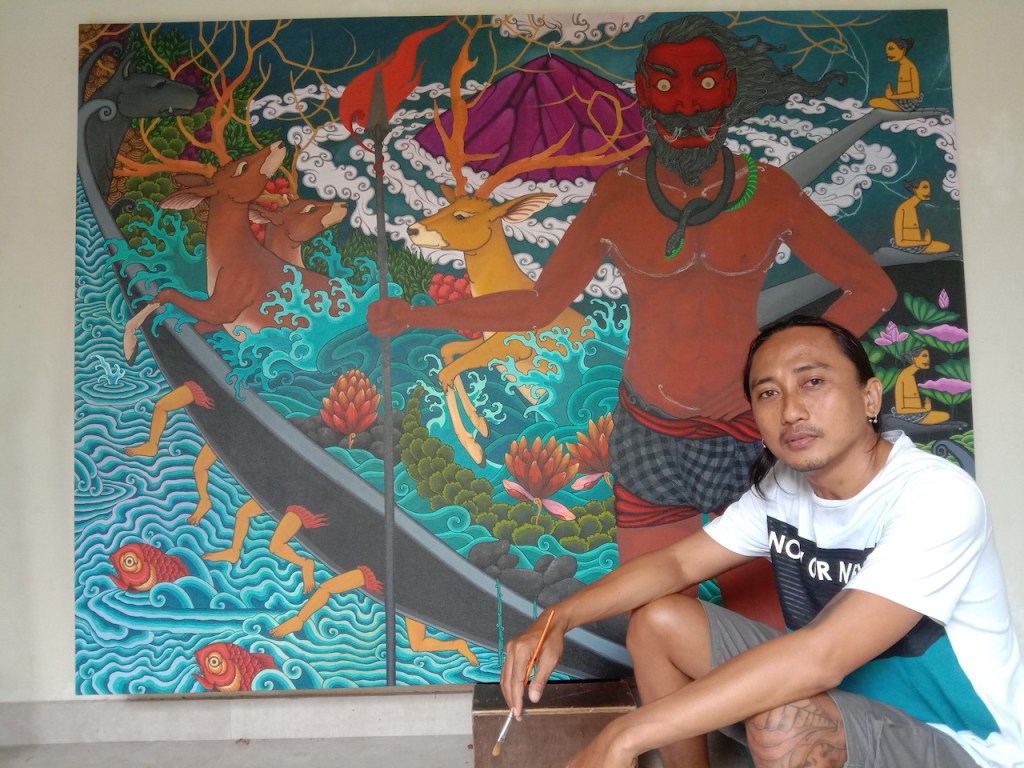
Balinese contemporary artist and PAYW participant I.B Suryantara. Image courtesy of the artist
The global pandemic in 2020 immediately impacted the Bali art economy with lockdowns, the closure of tourism and the physical art infrastructure, and the financial downturn. As a result, the digital sphere was the most practical solution. Galleries and artists went online or increased their digital exposure. The social media platform Instagram was effective in facilitating sales. YTB presents PAYW works to the market by sharing a catalogue of artists’ works on the TiTian Art Space digital platforms. The artworks are sold to the first offer received, with all proceeds going to the artist.
‘Faces’, an exhibition by 13-year-old Wayan Dendy in June 2020, adopting PAYW generated quick sales. In addition, PAYW was utilized for ‘drops’ by mid-career painters Putu Edy Asmara in August and Nyoman Bratayasa during September. Likewise, Edy Asmara enjoyed good sales. By lowering the financial barriers to buying art and the ease of sales through online purchases, PAYW enabled YTB to support its participating artists and the public throughout the pandemic. “PAYW proved an innovative vehicle to reach new clients and a novel way to relate with YTB’s loyal supporter base,” Soemantri told me. “We have more than doubled our network of collectors.”
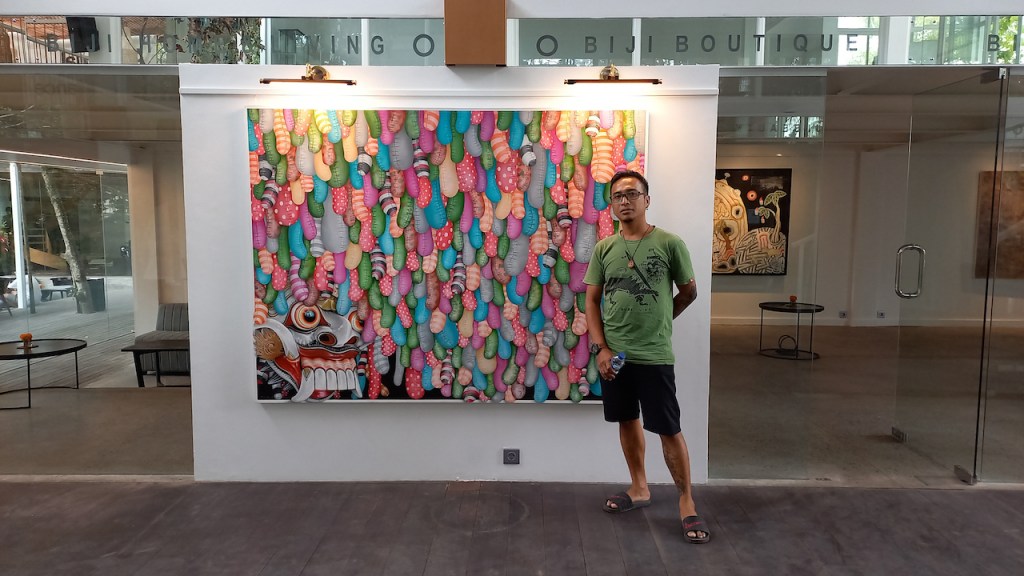
Balinese contemporary artist and PAYW participant Putu EDy Asmara at Biji Art & Culture, Mas, Ubud. Image courtesy of TiTian Art Space
Bali’s prevailing art business model has disadvantaged the artists and the buyers. The galleries and dealers are negotiating directly with the artist force their prices down to the lowest possible option. The middleman then sells the works at the highest possible price, serving excessive profits. In addition, the limited supply or scarcity of artworks available on the market also allows the middleman to increase the price.
“PAYW makes potential buyers pause and thinks about how their purchases will impact the artist’s lives, especially during the current economic paradigm,” states Soemantri. “In addition, PAYW can invoke a sense of kindness. The buyer knows their acquisition will help the artist, prompting acts of goodwill and compelling us to be compassionate and sincere.”
“PAYW helps override our sense of singularity, which then inspires a form of unity consciousness relevant during the pandemic because the artists are economically vulnerable. Currently, PAYW is only serving on a small scale because it only represents YTB artists. However, it is helping Balinese artists feed their families during this crisis.”
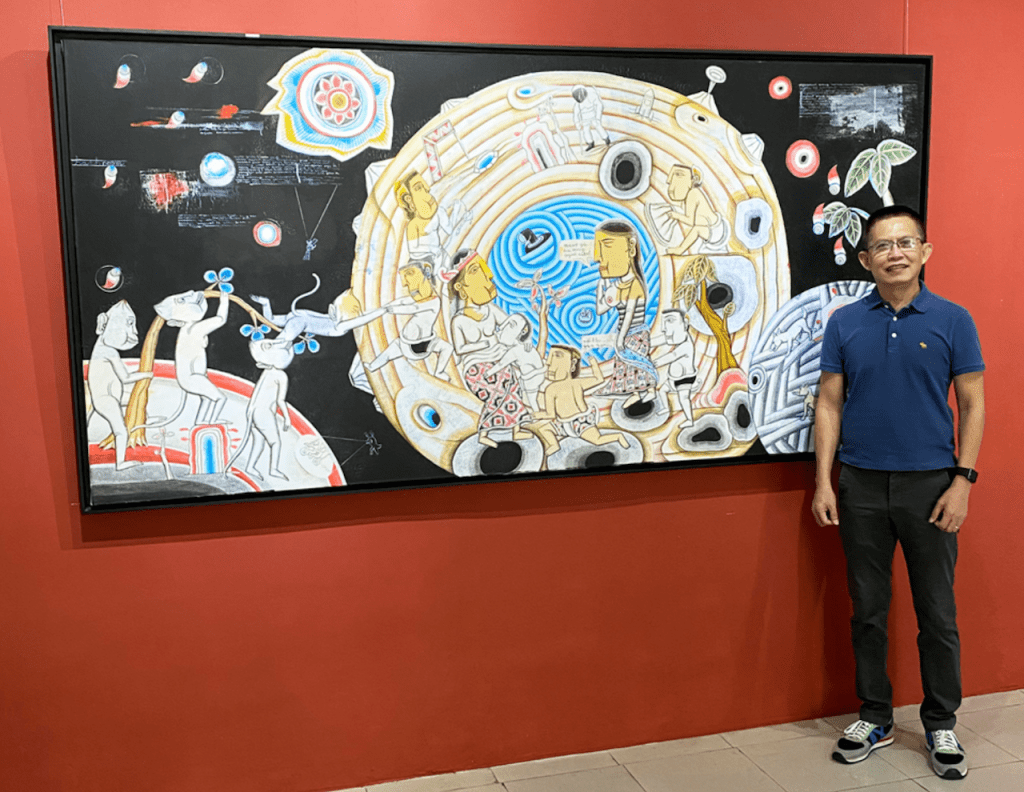
Yayasan TiTian Bali founder Soemantri Widagdo. Image courtesy of YTB
The Artists Perspective
Not all artists were convinced by the PAYW initially, but the participants have come to benefit from the model.
“Initially, I had my reservations, thinking the PAYW prices would be too low to cover my expenses,” said painter Gusti Wis. “Besides the financial benefits, PAYW speeds up the exposure and acknowledgement of my art practice within the market while adding fresh momentum to and maintaining market buoyancy. Furthermore, PAYW introduces price adjustments to help achieve fair market prices. This is required because many emerging Balinese artists have illogical, overinflated prices. They regularly exhibit in restaurants and hotels in tourist hotspots such as Canggu and Seminyak. They are catering to and hoping to make more money from tourists and the wealthy expatriates and Indonesians who frequent the area.”
“PAYW is a salvation because it allows me to be creative, without the burden of thinking about the market, sales and the financial needs of my family,” said contemporary artist Putu Edy Asmara. “It is essential to share with others about our experiences with PAYW, especially with children who want to learn more about creative activities.”

Balinese contemporary artist and PAYW participant Gusti Wis. Image courtesy of the artist
“With the pandemic, digital disruption, social media, NFTs and the blockchain, the world is undergoing rapid change. So why is Indonesian art stuck in the nostalgia of the 2006 market boom?” Gusti Wis states. “Many new artists entered the market, prices were overinflated, and also there was a lack of originality during the boom. The pandemic has changed the game. Artists who once created art only through demand and supply have disappeared. I witnessed fellow artists my age sell their works for pretentious prices. Now many artists are stressed because they can’t maintain their lifestyles.”
“Most of the artists here are struggling to stand their ground,” Gusti Wis explained. “PAYW offers a chance to stand up and continue to make art. However, this is only a possibility to those who are humble enough to use PAYW and realise that any income received is a blessing.”
A Collectors and an Art Lover’s Perspective
Some collectors are drawn to the PAYW model because the artists are compensated directly for their works rather than a middleman.
“A PAYW benefit for collectors is they get a sense that the price paid won’t be significantly different from what the artist usually receives. However, this system only works when you deal directly with the artist,” said Singapore based Indonesian collector Ario Harsanto, who collects modern and post-impressionism styled Southeast Asian art. “Paying what you like also gives the artist a sense of the market’s perception of their work. It, therefore, normalizes its future value as the market is heavily commoditized. There’s a typical agency problem where the intermediaries – galleries in this case – would prioritize their own interest and drive the price upwards to maximize their returns.”
“PAYW is important during this shifting economic paradigm as it enables artists to have cash flow without really sacrificing their work’s real value. PAYW is not a fire sale!” asserts the thirty-four-year-old Indonesian collector who has been collecting for the past decade. “The normalisation of the market price would also be helpful as an entry point for new collectors to the market. Of course, the challenge of upscaling PAYW is how and through which platform. One way to look at it is that it’s no different from the NFT market, which defines the value of the NFTs being sold.”
Another compelling benefit of PAYW is that it allows for more works to be discovered at fairer and less-inflated prices.

Biji Art & Culture in collaboration with TiTian Art Space in Mas, Ubud. Image courtesy of TiTian Art space
PAYW is a good platform for artists to bypass price setting and manipulation by galleries and collectors. And vice versa for collectors and buyers looking for art. PAYW is unique and, if positioned and marketed correctly, can be a win-win-win platform for all parties involved,” said Indonesian art lover Andre Halim, who doesn’t describe himself as a collector yet enjoys buying vibrant and bold artworks that convey fun and positivity. “PAYW should be adopted on a larger scale because there are many aspiring artists globally, who remain hidden due to the limited market scale.”
Andre offered suggestions to improve the system. “Perhaps an artwork’s minimum price can be added if artists prefer. A transparent platform describing any price charges would be ideal, so the public knows how much the artist receives. In addition, maybe a type of artist rating based on the number of artworks sold by an artist and comments from verified and no verified buyers, or based on views and likes, maybe functional, helping validate artworks so new buyers can take comfort in selecting artworks.”
The 21st-century global creative economy has significantly disrupted centralized art systems like the gallery and the art fair models, birthing a new digital era of opportunity. P2P models like Instagram are proven to facilitate increased sales. Exploring alternatives leading to the expansion of the affordable art market through new initiatives is essential. The introduction of an alternative business model, PAYW, may potentially revolutionize the art world by providing the opportunity for people to buy art at prices that aren’t dictated by the art market.
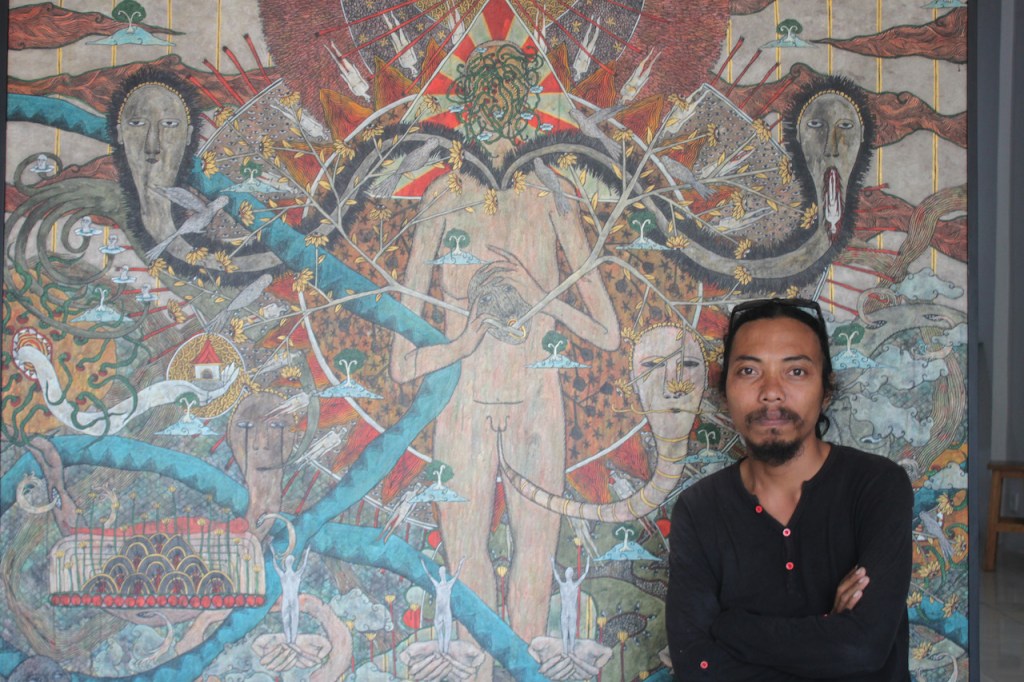
Balinese contemporary artist and PAYW participant Gede Sugiada. Image courtesy of the artist
titianartspace.com
IG: titianartspace
Words: Richard Horstman
Follow Richard on Instagram @lifeasartasia
No part of the written content of this website may be copied or reproduced in any form, along with article links uploaded to other websites, for any commercial purposes without the written permission of the author. Copyright 2024
 life as art asia