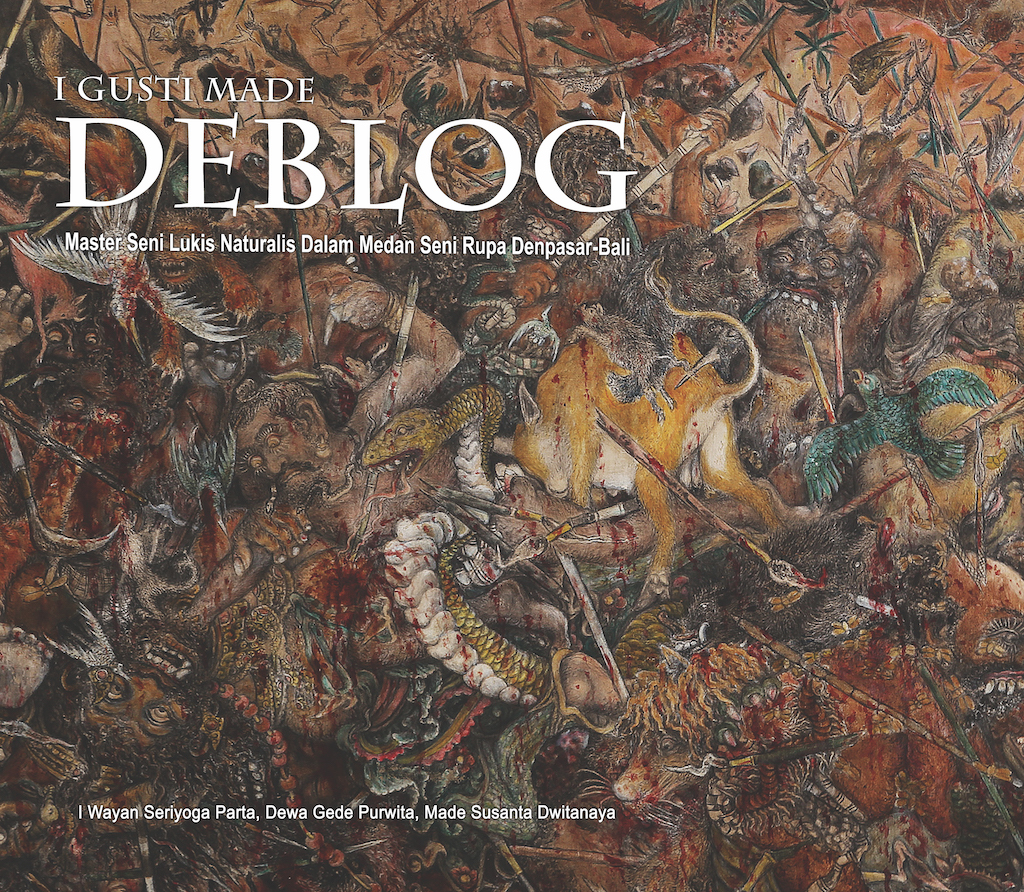
The paintings of I Gusti Made Deblog attracted enormous attention in the 20th-century, during the era of the famous Balinese Pita Maha artist’s association. However, what separated the often-reclusive artist from his peers was his achievements beyond the conventions with Chinese Ink and his naturalist painting style development.
Deblog’s compelling pictorial world birthed a new visual and technical realm. He blended the Sekala and Niskala, the visible and invisible elements of the environment, into a revolutionary, otherworldly genre, labelled ‘the Iconic Naturalist Deblog Style’. During this illustrious era, defined by innovation in Balinese art which has yet to be rivalled, the focus was upon the celebrated Ubud artists and members of the Pita Maha. Some connoisseurs cite Deblog’s talent as surpassing I Gusti Nyoman Lempad (1862-1987), renowned as Bali’s first great modernist. He was a highlight of the ‘Golden Years’ of Balinese painting 1930-1945.
Politically biased propaganda, its roots from Dutch colonialism, circulated internationally about the development of Balinese art and Ubud during the first wave of Bali tourism that ended abruptly with the beginning of WWII in 1942. Other essential art narratives were overlooked. Batuan pioneering modernist Nyoman Ngendon (1903-1947) did not receive appropriate recognition. Ubud artists such as Sobrat, Poleng and Lempad captured the limelight.

‘Kelahiran Gunatama’ 1936 – I Gusti Made Deblog. Image courtesy of Gurat Institute.
I Gusti Made Deblog – Master Seni Lukis Naturalis Dalam Medan Seni Rupa Denpasar – Bali’ by the Gurat Institute, launched in late 2020, readjusts the focus upon the importance of Denpasar and the unique contributions of Deblog. The Gurat Institute’s research, culminating in publishing a 200-page book and a documentary film, is a landmark in Balinese art. The first in-depth examination on the subject by an independent, locally based institution. Led by cultural activists and curators Wayan Seri Partayoga, Made Susanta Dwitanaya and Dewa Gede Purwita, Gurat was established in 2014. Driven by the importance of studying the historical value of Balinese art and culture, Gurat conducts research, documentation and evaluation of Balinese art and initiate events.
Research into Deblog’s journey began in 2014, receiving support from the Directorate General of Culture, the Ministry of Cultural Education of the Republic of Indonesia, through the Cultural Sector Facilitation program. At the beginning of the Covid pandemic in February 2020, the Gurat Institute rekindled their spirit for this project, intending to complete a book and film during the year. The book was released in January 2021, 45-minute film ‘I Gusti Made Deblog Documentary Film’ premiered on 22 May at Kulidan Space, Sukawati.
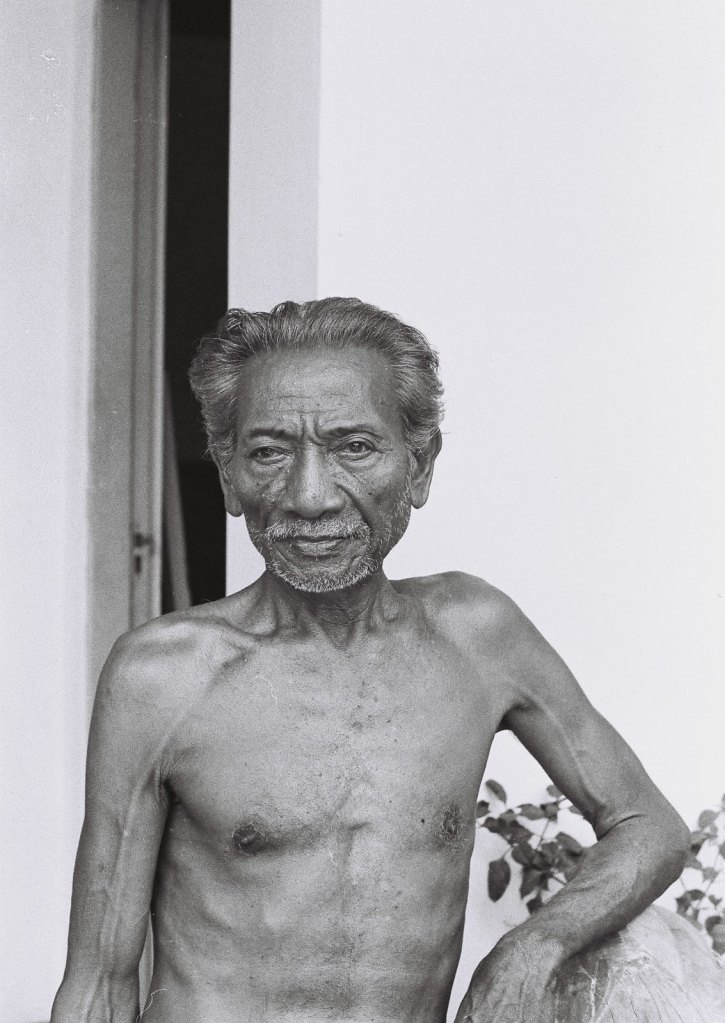
The reclusive icon of Balinese painting, Denpasar’s I Gusti Made Deblog. Reproduction of image by the Gurat Institute, Documentation by Adrian Vickers
Born in Banjar Taensiat Denpasar in 1906, Deblog passed away in 1986, aged 80 years. The research project results from summaries of interviews with friends and family, accessing previous accounts of the artist by researchers, anthropologists and historians. Including numerous photographs, a comprehensive catalogue of Deblog’s works spanning over fifty years, and sketches, the book investigates the distinctions of his composition construction and media applications techniques. There are comparisons between Lempad’s famous drawing style and the Batuan School. Deblog’s linage from the Denpasar Ida Bagus family of Giyar Delod Pasar gives insights into his living environment. The book strives to recreate the artistic atmosphere of Denpasar and the other painters, influential within the local development, setting the stage for Deblog to respond and innovate.
Accounts from Denpasar historian Nyoman Wijaya from the Udayana University describe Deblog’s teacher, the Taiwanese artist Yap Sin Tin, whose memory was basically erased from the historical development of Balinese art. Deblog learned and applied traditional Chinese Ink painting styles into his work. Wijaya valued Deblog’s work as a distinct form of cultural capital, based on Yap Sin Tin’s realist painting techniques with Chinese Ink. Deblog’s focus upon Classical Wayang paintings led to exciting new outcomes. The compositions are flat two-dimensional works that lack perspective. The characters are only seen from the front, but in Deblog’s eyes lacked dynamism. His expressive reinterpretations of the characters appeared as being more realistic and animated icons.
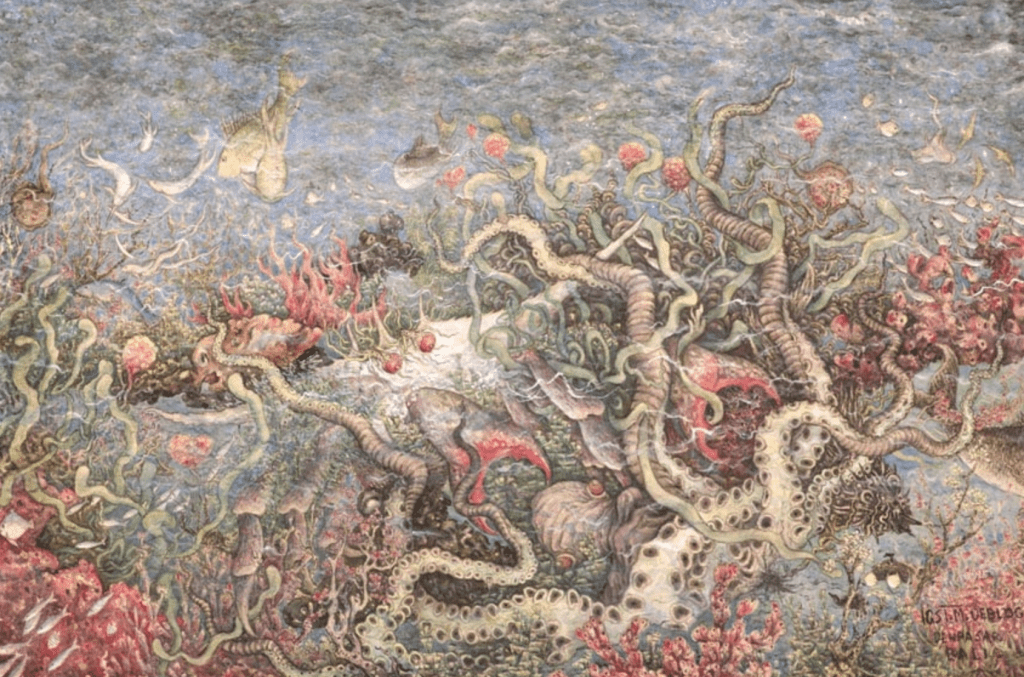
Deblog regularly visited Sanur beach throughout his life, often bathing in the sea. His recollections of the underwater realms viewed while sitting in the shallows with eyes open led to superb pictorial outcomes. Aquatic lifeforms swirling and interacting in vibrant motion. Deblog described realistic underwater themes in a naturalistic setting, establishing himself as one of the pioneers of this genre. His compositions are highly cherished by connoisseurs and appear in private and public collections worldwide and Nationaal Museum van Wereldculturen, the Netherlands. It is believed Deblog’s hours spent bathing at Sanur were a self-healing method for the traumatic syndrome he experienced during the Indonesian War of Independence against Dutch rule in the 1940s.
Adrian Vickers, Professor of Southeast Asian Studies at the Sydney University, has written extensively on Balinese art and researched Deblog from the 1970s. Vickers contributes a chapter in the book, ‘Perubahan Nalai Social dan Seni dalam Karya I Gusti Made Deblog’.
The film takes a different trajectory highlighting Gurat’s investigative process. The many interviews with local art figures and the team’s organizational approach offer insight into the enormous extent they dedicated themselves.

Image of Rangda, ink on paper, circa 193 by Gusti Made Deblog
Gurat Art Project, an arm of the Institute, initiates annual exhibitions and awards that have become an essential aspect of the developing Bali art infrastructure, and a stepping stone for emerging artists. The Gurat Institute represents a vital independent local initiative revealing the willingness of the young Balinese to create new narratives both describing and influencing the development of Balinese art, outside of the politics of the Indonesian academic institutes and western perspectives.
Words: Richard Horstman
Images courtesy of Gurat Institute & Richard Horstman
 life as art asia